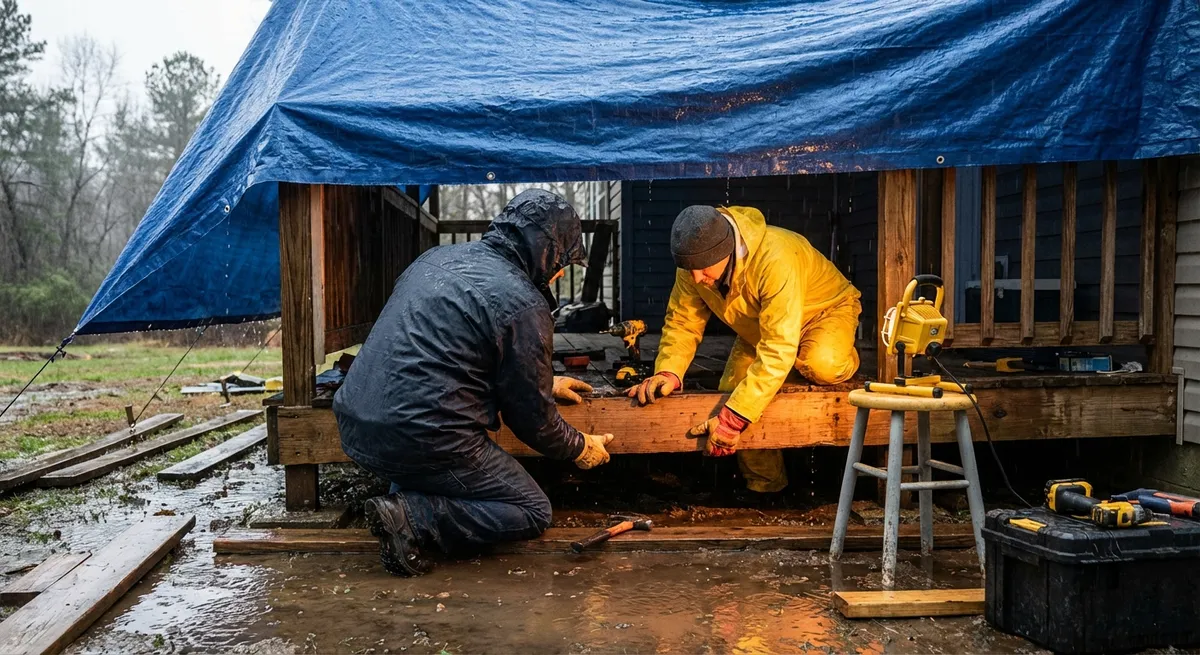
Reading the Weather Like a Building Material
Before you mix, cut, or fasten anything, check the forecast with the same seriousness you’d give structural drawings. Building materials “feel” weather conditions differently than people do.
High heat accelerates cure times, which can cause concrete or mortar to set too quickly at the surface while staying weaker inside. Cold slows everything down, increasing the risk of weak bonds or incomplete curing. High humidity and rain can wash out binders or trap moisture under coatings, while strong wind pulls moisture from fresh mixes and can warp sheet goods.
Make it a habit to log temperature, humidity, and wind at the start of the day and when you start any weather-sensitive step: mixing, coating, or sealing. Many manufacturer data sheets list ideal application ranges and adjustment guidelines. When conditions fall outside those ranges, you don’t always need to stop work—but you do need to change how you mix, protect, and cure. Treat “ideal conditions” on labels as targets, then build a plan for how you’ll protect your repair when the weather isn’t ideal.
Tip 1: Adjust Mixes for Temperature and Humidity, Not Just Strength
Most people choose a repair mix based on strength alone (e.g., 4,000 psi concrete or Type N mortar). In the field, you need to think in two layers: required strength and likely weather during placement and curing.
In hot, dry weather, aim for slightly lower water content but increased curing protection. Pre-dampen the substrate (without leaving standing water) so it doesn’t suck moisture out of the fresh mix. Use shade, windbreaks, and light-colored covers to reduce surface temperature. Avoid hot water in your mix; use the coolest clean water you can manage. If allowed by the product data sheet, use retarding admixtures to slow the set for larger repairs.
In cold conditions, the priority shifts to preventing freezing. Most cement-based products need the material and the substrate above 50°F (10°C) for a full cure. Use warm (not hot) mixing water within manufacturer limits, store bags and tools indoors before use, and schedule mixing for the warmest part of the day. For thicker repairs, insulating blankets or temporary enclosures with safe heaters can keep the work in the acceptable range overnight. Never add unapproved chemicals like household antifreeze—use only admixtures and accelerators specified by the manufacturer or standards.
Tip 2: Control Moisture Movement Before You Start Any Exterior Repair
Water does more damage to repair work than almost anything else, especially when it moves where you’re not expecting it. Before you mix patch materials or install sealants, trace how water currently flows and where it can get trapped after your repair.
On masonry and concrete, look for vertical cracks, efflorescence, and dark, damp areas. These often indicate active water paths. If you patch the visible damage without addressing the source—failed flashing, clogged weep holes, or missing drip edges—your repair will likely fail early. Consider temporary diversion: simple flashing tape, peel-and-stick membranes, or even a plastic skirt can redirect water while you work.
For horizontal surfaces, inspect pitch and drainage points before patching. A perfectly executed concrete repair will still spall if ponding water freezes on its surface repeatedly. In some cases, the right move is to slightly reshape (feather) the repair area to nudge water away from the building or joint. On exterior wood repairs, always back-prime or seal cut edges, especially at end grains, so moisture can’t wick in behind your visible fix.
Tip 3: Use Temporary Protection That Actually Matches the Repair
Throwing a tarp over a repair is not a complete protection plan. The type of protection should match the material you’re using, the stage of curing, and the local weather pattern over the next 24–72 hours.
For fresh concrete, masonry, or patching compounds, you’re mainly managing moisture loss and temperature. In hot, breezy weather, breathable curing blankets, burlap kept damp, or light-colored insulated blankets can retain moisture while shielding from sun and wind. In cool, damp conditions, you still want protection from rain, but you don’t want to trap standing water directly on the surface. Tent-style coverings that shed water and allow airflow around the sides work better than plastic pressed flat against the repair.
When using sealants, paints, or coatings, focus on keeping liquid water and heavy dew off the surface until the product reaches its initial cure. Pitch tarps or temporary roofs so runoff cannot drip on or run across freshly coated surfaces. Ensure the covers don’t touch wet finishes—use furring strips or simple frames to create clearance. For wind-prone sites, secure covers at multiple points; a flapping tarp can scar fresh repairs as effectively as rain.
Tip 4: Sequence Interior and Exterior Work to Reduce Weather Risk
On many projects, the most powerful weather tactic is not a product—it’s sequencing. You can buy time by rearranging tasks so weather-sensitive repairs happen during your best weather window, not just in the order they appeared on your original checklist.
Start by categorizing your tasks: those that must be dry (coatings, sealants, electrical work near openings), those that are temperature-sensitive (structural concrete, mortar, adhesives), and those that are more resilient (demolition, layout, rough carpentry away from openings). Then line them up against your short-term forecast.
If a storm is coming, move up any step that would let water in if left incomplete—roof penetrations, flashing repairs, or window re-sets. Finish those to a weather-tight point first, even if it means postponing interior patching or trim. On hot days, do demolition, layout, and prep mid-day, and schedule your mixes, coatings, and adhesive work for early morning or late afternoon when surfaces are cooler. This kind of sequencing doesn’t just protect materials; it protects your labor by avoiding rework.
Tip 5: Document Conditions and Methods So Future Repairs Hold Up Better
Recording how you handled a weather-affected repair can save substantial time and money on future work at the same property—or even on the same type of assembly elsewhere. Treat your repair like a small case study and capture key details.
At minimum, note the date, time, ambient temperature, and whether conditions were sunny, overcast, windy, or humid. Record which products you used, the batch or lot number if available, and any modifications you made (slight water reduction, admixtures, extended curing blankets, or temporary tenting). Take photos before, during, and after the repair from consistent angles.
If a repair is concealed later (behind siding, tile, or insulation), keep a simple sketch in your project file and label any access panels. This documentation supplies context if problems show up years later and supports warranty claims with manufacturers, who often need proof that environmental limits and application instructions were followed. Over time, these notes become your personal weather playbook: which tactics worked at a windy coastal job, which failed near a shaded, damp wall, and which products consistently performed in your climate.
Conclusion
You don’t control the weather, but you do control how your repairs respond to it. Professionals and DIYers who treat temperature, moisture, and wind as core design constraints—rather than background noise—produce work that survives real conditions, not just ideal ones. By adjusting mixes to the environment, managing moisture movement, choosing the right temporary protection, sequencing tasks around the forecast, and documenting your methods, you turn unpredictable weather into just another variable you can plan around. The result is straightforward: fewer callbacks, fewer failed patches, and repairs that stay solid long after the forecast has changed.
Sources
- [Portland Cement Association – Concrete in Cold Weather](https://www.cement.org/cement-concrete-applications/paving/working-with-concrete/concrete-in-cold-weather) - Guidance on temperature limits, protection methods, and curing practices in cold conditions
- [U.S. National Weather Service – Weather Safety for Outdoor Work](https://www.weather.gov/safety/heat-illness) - Practical information on working safely in heat, including environmental factors that affect jobsite planning
- [The Concrete Society (UK) – Curing of Concrete](https://www.concrete.org.uk/fingertips-nuggets.asp?cmd=display&id=855) - Technical discussion of curing methods, moisture control, and how weather affects long-term durability
- [U.S. General Services Administration – Building Envelope Design Guide](https://www.gsa.gov/technical-procedures/building-envelope-design-guide) - Covers water management, flashing, and detailing strategies that influence how repairs should address moisture paths
- [Quikrete – Product Data and Project Tips](https://www.quikrete.com/productlines/product_data.asp) - Manufacturer data sheets with recommended temperature ranges, mixing adjustments, and curing instructions for repair materials