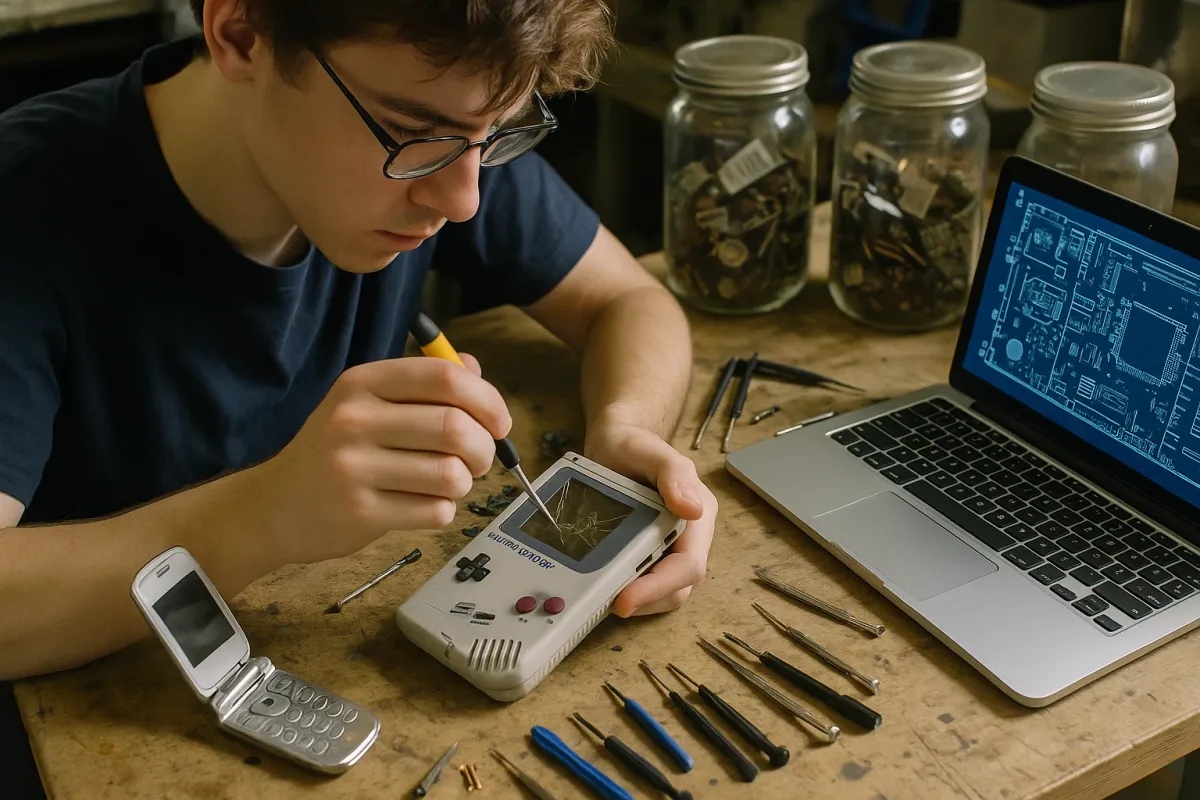
Whether you’re a contractor or a serious DIYer, knowing how to safely evaluate, repair, and selectively upgrade older gear and fixtures is now a core skill. Instead of treating everything “old” as landfill material, use these expert strategies to decide what to fix, how to fix it, and when to walk away.
1. Start With a “Repair or Retire?” Assessment
Before you sink time and money into any repair—whether it’s a decades‑old drill or a tired garage door opener—run a quick structured assessment:
- Safety first. If the device involves high loads (lifts, jacks, chains), pressure (compressors), fuel, or mains voltage, inspect for cracked housings, missing guards, burned insulation, or distorted structural parts. Any obvious structural failure is a red flag: scrap it.
- Parts availability. Obsolete doesn’t always mean unsupported. Like the people hunting down parts for VHS players featured in “obsolete tech” posts, check manufacturer sites, eBay, surplus suppliers, and specialty forums for parts diagrams and spares. If key safety parts (guards, limit switches, brake assemblies) are unavailable, replacement is usually safer than improvisation.
- Cost vs. replacement. As a rule of thumb: if a repair will cost more than ~50–60% of a reliable new equivalent—and the device doesn’t have unique capabilities—lean toward replacement. But factor in downtime and calibration effort for new tools as well.
- Energy and performance. Older lighting ballasts, motors, and chargers often waste energy. If the unit runs hot, hums loudly, or vibrates excessively even when working, replacement with a modern high‑efficiency model can pay back quickly on a jobsite.
- Regulatory and code issues. In construction environments, obsolete gear can create compliance headaches. For example, pre‑GFCI extension reels, non‑grounded cords, or ladders without modern safety ratings may fail site safety audits. Even if you can repair them, you might not be allowed to use them professionally.
Document your decision in a simple log (date, model, issue, assessment, outcome). That record becomes valuable for fleet management, warranty claims, and safety audits.
2. Revive “Obsolete” Power Tools With Electrical and Battery Basics
Just as people online are figuring out how to keep their old cassette players alive, many pros are trying to rescue out‑of‑production drills, grinders, and saws—especially when they feel more solid than today’s plastic housings. Focus on these high‑impact fixes:
- Clean and inspect internals.
- Disconnect from power, remove covers, and carefully blow out dust with a low‑pressure air source (avoid spinning motors at high RPM with air).
- Look for carbon buildup on commutators, charred windings, or melted connectors. Light carbon can be cleaned with isopropyl alcohol and a soft brush; burned insulation means it’s time to scrap.
- Refresh brushes and commutators.
- Worn carbon brushes are a classic failure point. If they’re under spec length or chipped, replace them with manufacturer‑approved parts.
- Lightly polish commutators with fine abrasive (e.g., 600–1000 grit) wrapped around a stick, then blow out dust. Never use aggressive grinding that can unbalance the motor.
- Check cords, plugs, and strain reliefs.
- Replace any cord with cuts, flattened sections, or exposed conductors. Use 3‑wire SJTW or better for jobsite use, sized appropriately for the tool’s current draw.
- Always install a proper strain relief; never rely on a knot inside the housing.
- Battery rehab—only when it’s safe.
- NiCd and NiMH packs: Many “old but gold” tools used these chemistries. You can often buy or build replacement packs using modern low‑self‑discharge cells, reusing the original housing—but only if you’re comfortable with spot‑welding or advanced soldering, and you understand the risks.
- Li‑ion retrofits: Be extremely cautious. Upgrading an older platform to lithium may overload the motor or bypass essential protections. Unless you’re an expert, it’s safer to use aftermarket packs designed specifically for that model by reputable vendors, or retire the tool.
- Test under load.
- After any repair, run the tool under typical load for several minutes. Watch for excessive heat, smell, or arcing through ventilation slots. Use a non‑contact thermometer to compare temperatures to similar modern tools if possible.
If you’re operating in a professional environment, tag repaired tools with date, work done, and the technician’s initials. That level of documentation builds confidence with site supervisors and clients.
3. Upgrade, Don’t Overbuild: Smart Fixes for Aging Home Systems
The “obsolete things” conversation extends beyond gadgets to whole‑house systems: fluorescent fixtures, older switchgear, or garage door openers with no safety sensors. You don’t always need a full gut‑and‑replace; often, targeted upgrades extend service life while bringing systems closer to modern standards.
Lighting fixtures
- Retrofit tubes and lamps before replacing housings. LED tubes designed for magnetic or electronic ballasts can drop directly into older fluorescent troffers. Check whether the product is ballast‑compatible or requires bypass; follow wiring diagrams precisely.
- Bypass ballasts that run hot or buzz. For many commercial spaces, a ballast‑bypass LED retrofit removes a common failure point and improves efficiency. Label fixtures clearly as “direct‑wire LED only” to prevent future misuse.
- Preserve decorative fixtures. For vintage sconces or pendants, focus on replacing lampholders, rewiring with modern heat‑rated cable, and grounding metal parts while keeping the appearance intact.
Garage door openers and other motors
- Add safety without full replacement. On older openers in good mechanical condition, adding modern photo‑eye sensors and testing auto‑reverse force brings them closer to current safety expectations. Consult manufacturer literature to ensure compatibility.
- Lubricate and align first. Noisy, struggling systems often need lubrication and track alignment more than new motors. Use manufacturer‑approved lubricants (often lithium‑based) sparingly on rollers, hinges, and springs—never overload torsion springs; that’s specialist work.
- Monitor power consumption. A clamp meter can show if an older motor is drawing more current than its nameplate rating under normal use—an early sign it’s time to replace rather than repair.
Aim for “least invasive, code‑compliant” interventions: keep what’s structurally sound, upgrade what’s unsafe or inefficient.
4. Give New Life to “Obsolete” Materials With Professional Repair Methods
The trending nostalgia for old items is also pushing more people to repair instead of discard older building materials: solid wood doors, plaster walls, tile, and stone. Professionals can differentiate themselves by mastering repair over replacement:
Solid wood doors and trim
- Stabilize, don’t smear. For cracked panels and joints, avoid generic fillers as the first resort. Open the joint slightly, inject wood glue or structural epoxy, clamp properly, then lightly refinish.
- Use Dutchman patches. For localized damage (lock changes, deep gouges), inlay a carefully shaped piece of matching wood rather than overfilling. This is standard in architectural restoration and looks far better long‑term.
- Respect movement. Older wood moves with humidity. Leave proper clearances, and avoid “locking” wide panels to frames with rigid fillers or too many fasteners.
Plaster and masonry
- Match materials and flexibility. Patching lime plaster with hard gypsum or cement‑rich mixes often leads to cracking at the interface. In heritage work, use compatible lime‑based products with similar vapor permeability.
- Stitch cracks structurally. In masonry, don’t just fill; use helical bars or pins across structural cracks where appropriate, combined with grout injection, to reconnect separated sections. These methods come from structural remediation and can be scaled down for smaller failures.
- Clean gently. When reviving old brick or stone, avoid aggressive blasting that erases fired faces or patina. Use low‑pressure washing, non‑acidic cleaners suitable for the substrate, and test in inconspicuous areas.
Well‑executed repairs on “obsolete” materials are often more durable and more visually compelling than full replacement with modern products.
5. Build a Repeatable Repair Workflow and Documentation Habit
What separates hobbyist tinkering from professional‑grade repair is process. As the online fascination with “obsolete” things grows, clients will increasingly ask, “Can you fix this instead of replacing it?” Having a clear workflow helps you answer confidently and profitably:
Standard intake checklist
- Item details (brand, model, serial, age if known) - Reported issue and conditions (when it fails, noises, smells, error lights) - Environment (jobsite, workshop, outdoor, near corrosive agents or dust) - Safety flags (shocks felt, burning smell, fluids, past DIY repairs)
Evidence‑based diagnosis
- Visual inspection with photos - Basic measurements (voltage at terminals, continuity of key circuits, insulation resistance where applicable) - Side‑by‑side comparison with a known good unit when possible
Clear repair proposal
- Outline options: minimal safe repair, comprehensive refurbishment, or replacement - Estimate parts, labor, and downtime for each - Explain any limitations (e.g., “No OEM parts available; using compatible aftermarket components with 1‑year warranty”)
Execution with traceability
- Use labeled containers or trays for disassembly; photograph complex assemblies before and during teardown. - Mark replaced components and bag old parts for client review if appropriate. - Maintain ESD precautions for electronics: grounding straps, anti‑static mats, and proper handling of boards.
Test, tag, and educate
- Function test under realistic load and duration. - Apply a durable label with repair date, key work performed, and next recommended inspection. - Provide succinct user guidance: “Avoid continuous operation beyond X minutes,” or “Use only with GFCI‑protected circuits,” etc.
For DIYers, this same discipline—scaled down—keeps projects safe and repeatable. For professionals, it turns repair work into a credible, billable service line instead of ad‑hoc favors.
Conclusion
The renewed interest in “obsolete” objects isn’t just a social‑media trend; it reflects a broader shift away from disposable thinking and toward repair, adaptation, and smarter use of what we already have. On jobsites and in workshops, that mindset translates into carefully assessing when to repair, when to upgrade, and when to replace—and doing each with a clear, professional process.
If you build habits around structured assessment, safe electrical and mechanical work, material‑appropriate repairs, and thorough documentation, you’ll be ready for the next wave of “Can you fix this?” requests—whether it’s a vintage drill, a worn garage door opener, or a century‑old door a client isn’t ready to let go.