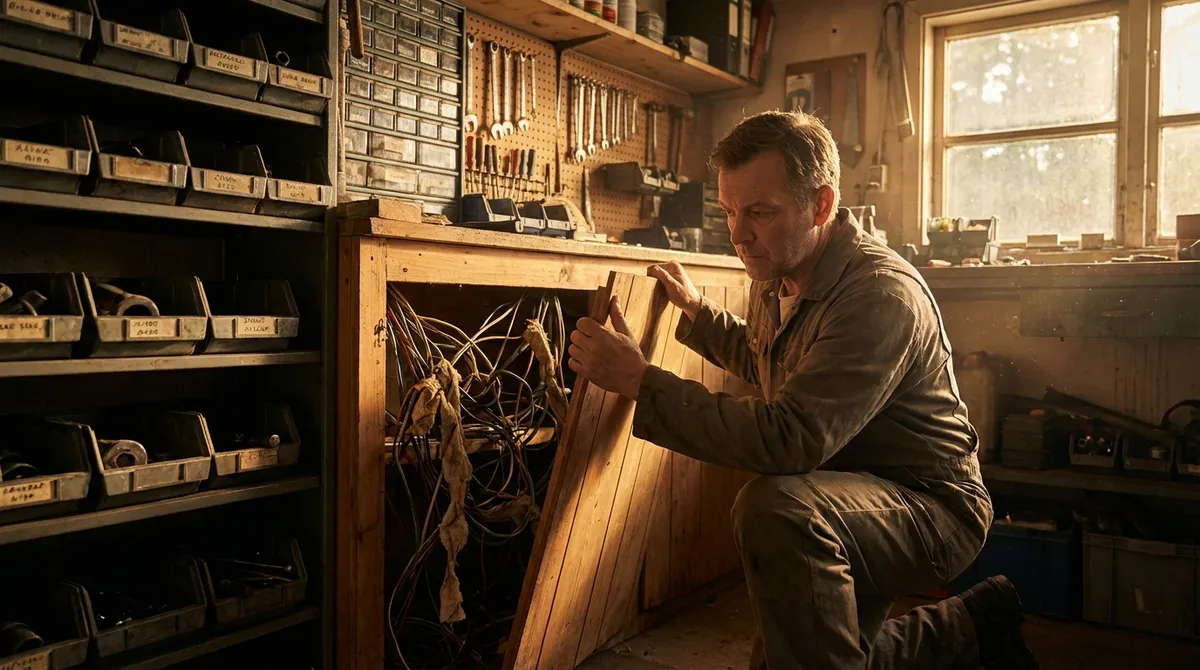
This guide walks through five expert-level strategies for dealing with failed or failing repairs—whether you’re a contractor, facilities pro, or serious DIYer. The focus is on repeatable methods you can apply across many materials: concrete, masonry, wood, and building envelopes.
Step Back Before You Tear In: Forensic First, Tools Second
When a repair fails, your first job isn’t demolition—it’s investigation. Rushing to grind out the old patch or re-caulk the joint hides the evidence you need to avoid another failure.
Start by documenting the condition before you touch anything. Take photos of cracks, staining, delamination patterns, rust bleed-through, or efflorescence. Look for directional clues: is damage concentrated near a downspout, joint, structural support, or thermal bridge? That often tells you whether the driver is water, movement, or load.
Next, ask three questions:
Did the original repair address the cause or just the symptom?
For example: patching spalled concrete under a balcony without fixing the waterproofing above all but guarantees a repeat failure.
Was the material compatible with the substrate and conditions?
A rigid patch over a moving joint, or a low-modulus sealant in a high-abrasion zone, can both fail even if installation was careful.
Did the installation follow the data sheet—cure times, prep, thickness, and temperature limits?
“It looked set” is not the same as “reached full cure.”
Use a simple checklist: moisture, movement, load, UV exposure, chemical exposure, freeze–thaw, and workmanship. If you can’t explain why the repair failed in terms of at least one of those, you’re not ready to re-repair. For larger or structural work, be prepared to consult a structural engineer or building envelope specialist—especially when you see sagging, major cracking, or widespread corrosion.
Clean Removal: Strip Out the Failure Without Damaging What Works
Once you understand why the repair failed, you can move to removal. The goal is to take out all compromised material while leaving sound base material intact. Sloppy demo can cause secondary damage that shortens the life of your new repair.
For cementitious and masonry repairs, avoid feather edges and shiny, smooth interfaces. Cut back to sound material with squared or slightly undercut edges, using a grinder, chisel, or saw per the substrate. Any hollow-sounding or delaminated areas should come out—even if they “look OK”—because they’re already debonded.
For sealants and coatings, remove every trace in the active repair area:
- Use a sharp knife or oscillating multi-tool to cut sealant out of joints.
- Mechanically abrade or chemically strip failed coatings per manufacturer guidance, especially where adhesion failed or blistering is present.
Critically, clean beyond the visible damage. Oils, biological growth, salts, or unseen moisture can extend further than the obvious failure line. Use the appropriate cleaning method: pressure washing (within safe limits), detergent scrubbing, degreaser, or mechanical abrasion. Rinse and allow proper drying time before installing new materials—many manufacturers specify substrate moisture limits for good adhesion and cure.
If you uncover rebar corrosion or rotten framing, you’ve moved from a “repair redo” to a more serious remediation. Stop and reassess scope; don’t bury structural problems in fresh material.
Choose Materials to Match Movement, Moisture, and Maintenance
Using a “stronger” or “stickier” product is not automatically an upgrade. Professional re-repair work means matching materials to how the assembly actually behaves in service.
Consider three realities before selecting products:
Movement profile
Does the area see expansion/contraction, settlement, vibration, or live loads? A rigid epoxy overlay across an active movement joint is a designed failure. In moving areas: - Use appropriate joint design with backer rod and elastomeric sealant rated for the expected joint movement. - Separate structural repairs (e.g., epoxy injection for structural cracks) from non-structural cosmetic fills.
Moisture and exposure
Where does water come from? Rain, condensation, groundwater, plumbing, or vapor drive? A repair that ignores hydrostatic pressure or vapor transmission will blister, pop, or peel. - For damp substrates, select materials rated for application to green or slightly damp concrete if drying isn’t practical. - For exterior or wet areas, confirm UV stability and water immersion resistance in the product data sheet.
Future maintenance and compatibility
Assume this area may need work again. Sometimes a slightly less “permanent” material that remains re-workable is a better choice than a rigid, hard-to-remove system that complicates future access. - Avoid mixing incompatible chemistries (e.g., some solvent-based coatings over remaining latex, or dissimilar metals without isolation). - Confirm chemical compatibility when repairs intersect existing membranes, sealants, or coatings.
Read and keep the technical data sheets (TDS) and safety data sheets (SDS) for every product you use. Note minimum and maximum substrate temperature, recoat windows, and cure times before loading, immersion, or freeze exposure. That’s where most re-repairs succeed or fail—on paper, not in the field.
Surface Prep and Detailing: Small Steps That Make or Break Bond
On repeat repairs, surface preparation matters more than the repair compound itself. The previous failure often roughened only parts of the substrate or left behind contaminants. Your job is to give the new material a consistent, mechanically sound surface.
Aim for these fundamentals:
- Profile, not polish
For concrete and masonry, you want a clean, textured surface—not a glass-smooth one. Light grinding, abrasive blasting, or bush hammering can create better mechanical keying. Follow the profile recommendations (often expressed as CSP—Concrete Surface Profile) in the product’s TDS.
- Thorough dust and debris removal
After cutting and grinding, vacuum with a HEPA-capable or fine-filter vacuum rather than sweeping. Dust left in cracks or pores is a common cause of debonding.
- Moisture conditioning where needed
Some cement-based repair mortars call for a saturated-surface-dry (SSD) substrate: damp but with no standing water. That prevents the substrate from pulling water out of the repair mix too quickly. Other products require dry surfaces. Treat this as a spec item, not a suggestion.
- Use of primers and bonding agents
Many high-performance systems rely on primers, bonding slurries, or key coats. Skipping them—or substituting your own blend—voids the system design. Mix and apply bonding agents exactly as instructed, including open times before top application.
Detailing is equally important. Tool sealant joints to the correct depth and shape, ensure backer rod is correctly sized and not punctured, and chamfer or radius edges if the product calls for it. Small geometry changes can significantly reduce stress concentrations and extend service life.
Protect the Cure and Monitor Performance, Not Just Appearance
Even a perfectly designed and installed re-repair can fail if it’s loaded, flooded, or frozen before it reaches design strength. The last step is often the most neglected: controlled curing and early monitoring.
For cementitious repairs, protect the work from:
- Rapid drying due to sun and wind (use wet curing, curing compounds, or coverings as specified).
- Early freeze–thaw cycles before the material has adequate strength.
- Premature traffic or load—double-check structural or heavy-traffic cure times; they are often longer than “light use” times.
For sealants, coatings, and membranes:
- Respect tack-free and full-cure windows before exposing to water, debris, or foot traffic.
- Avoid applying in marginal conditions—borderline temperatures or rising humidity can trap moisture or slow cure dramatically.
Once the repair is in service, schedule at least one follow-up inspection, even for small jobs. Look for early warning signs: hairline edge cracking, slight debonding, new moisture staining, or unexpected movement. Early intervention on a small defect is far cheaper than another full re-repair.
Document what you actually did: products, batch numbers, weather, surface prep method, and cure protection used. Over time, this record becomes your own field-tested playbook, showing which combinations hold up and which fall short in your specific climate and building stock.
Conclusion
Re-repair work separates casual fixes from professional practice. When a repair fails, it’s an opportunity to upgrade your approach—to investigate more carefully, select materials based on real-world conditions, execute disciplined surface prep, and protect the cure like it matters. Contractors, facility managers, and serious DIY builders who treat failed repairs as diagnostic lessons rather than disappointments consistently deliver longer-lasting results.
Instead of “trying harder” with the same method, step back, analyze, and apply a structured process. That’s how you turn a problem job into a durable fix—and protect your time, budget, and reputation on the next project.
Sources
- U.S. General Services Administration – Concrete Repair Guidelines - Federal guidance on concrete repair methods, surface preparation, and material selection
- Portland Cement Association – Concrete Repair - Technical overviews of concrete deterioration, evaluation, and repair strategies
- Sealant, Waterproofing & Restoration Institute – Technical Bulletins - Best-practice guidance for sealants, waterproofing, and building envelope repairs
- International Association of Certified Home Inspectors – Foundation Crack Evaluation - Practical reference on crack types, causes, and when structural evaluation is needed
- U.S. Army Corps of Engineers – Surface Preparation and Coating Application (EM 1110-2-3400) - Detailed standards for surface prep, coatings, and curing under field conditions