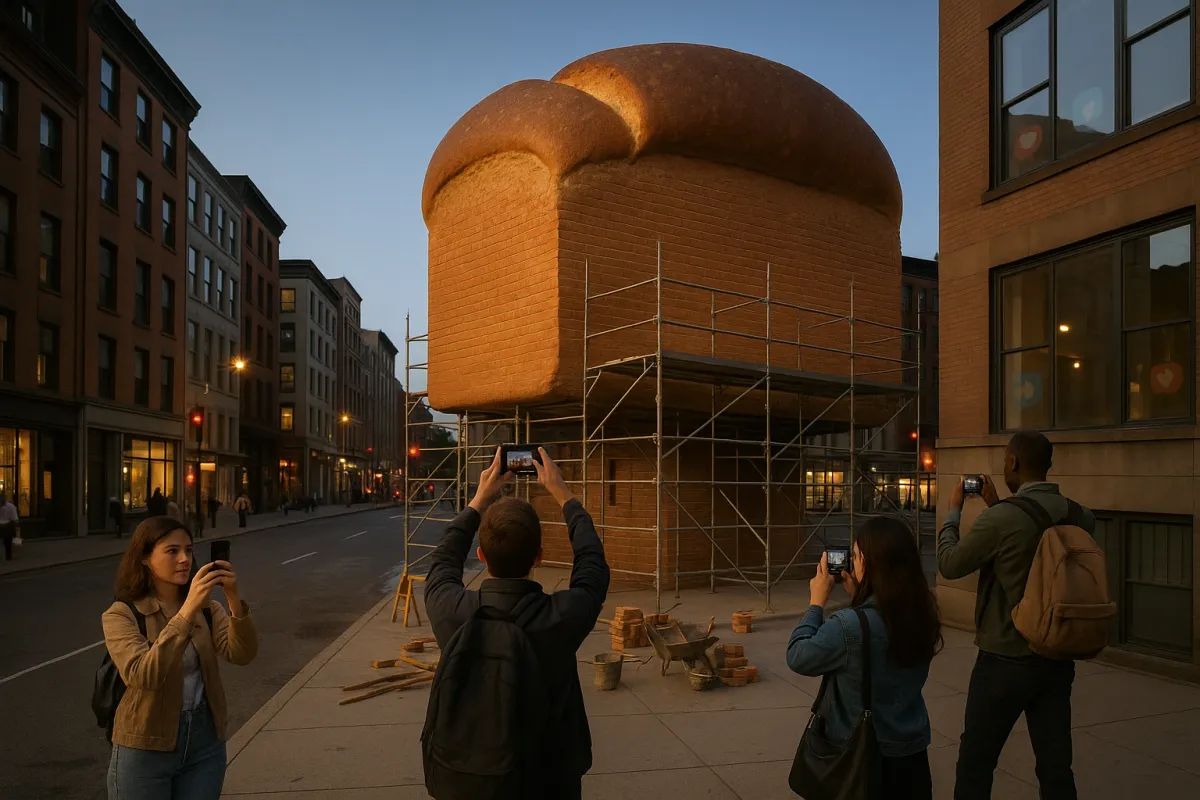
Architects worldwide are pushing visual boundaries, and clients—fueled by social media—are asking for “iconic” and “Instagrammable” instead of just “durable” and “straight.” That trend affects everything from how we lay brick to how we coordinate with designers and inspectors. If you work with block, brick, stone, or structural concrete, these viral oddities are a preview of the jobsite conversations you’ll be having over the next few years.
Below are five expert, practice-focused ways masonry pros and serious DIYers can adapt to this era of visually loud, structurally complex buildings—without sacrificing performance, code compliance, or buildability.
1. Translate Wild Concepts into Buildable Masonry Details
Online, “AI-generated” looking buildings can float, twist, and fold in ways real masonry can’t. On site, gravity and codes still win. The key skill now is translation: turning extreme concepts into rational, constructible systems.
- Start with structure, not appearance. Before discussing bond patterns or cladding layouts, confirm how loads are transferred. Is the “weird” element purely cosmetic, or is it structural masonry? Slabs, steel frames, and engineered lintels often do the heavy lifting behind dramatic shapes.
- Break complex geometry into simple modules. Curved or warped façades can usually be rationalized into short, straight segments or faceted planes. Work with the designer to define facet angles and panel sizes that line up with standard brick or CMU dimensions.
- Insist on sectional details early. Ask for wall sections through every unusual junction—corners, overhangs, and transitions. A concept render isn’t enough. You need to know where movement joints, flashing, and reinforcement will go before laying the first course.
- Offer masonry-driven alternatives. If a proposed detail will be fragile or impossible in brick or block, propose a modified profile, hidden backing system, or hybrid design (e.g., stucco-on-frame for the most complex curve, masonry for the main volumes).
- Document constructability decisions. Before construction, record agreed tolerances, course heights, and anchorage methods. When the final building gets photographed from three inches away for social media, you’ll be glad expectations were clear.
The more viral “weird” architecture circulates, the more owners will bring screenshots to the table. Position yourself as the person who can say, “Here’s how we can actually build this safely in real masonry.”
2. Control Curves, Angles, and Unusual Planes with Precision Layout
The “bread-factory” style buildings going viral often rely on heavy curves, tilted volumes, or non-orthogonal geometry. For masonry, those forms magnify any layout or tolerance errors. Getting the first day right is what keeps the last day from becoming a rework marathon.
- Invest in layout tools, not guesswork. For angled or curved walls, a rotary laser, digital level, and layout software or a good total-station workflow pay off fast. On a DIY scale, even a basic laser line level plus a detailed full-scale chalk layout on slab is a big step up from “eyeballing it.”
- Set physical control points for every change in direction. Don’t just snap a single centerline; establish control points for each kink, angle break, or radius center. Mark these clearly and protect them throughout construction.
- Use templates and jigs. For repeating angled returns, custom bond patterns, or radial walls, make plywood or metal templates. These control both horizontal layout and vertical plumb, saving time on repeated checking.
- Pre-calculate course heights and alignments. Run a course schedule for total wall heights, especially where sloping parapets or stepped façades meet. Decide in advance where you’ll accept slightly nonstandard mortar joints versus where dimensions must be exact.
- Set tolerance limits in writing. Many “sculptural” designs assume near-zero deviation, but most codes and standards accept realistic tolerances (e.g., ±10 mm over 3 m, per local standards). Align the designer’s expectations with the realities of masonry construction.
When geometry becomes a design feature, layout becomes a risk-control tool. Treat it as a dedicated phase, not a quick step between excavation and block delivery.
3. Design Façades for Cameras: Joints, Shadows, and Weathering
The “AI-looking” structures making the rounds online share one thing: they photograph well. Masonry can do this too—but only if you design and build for how the surface will be seen in various light and weather conditions, not just how it looks in a 3D rendering.
- Use joints as visual elements, not just technical necessities. Vertical and horizontal joints, movement joints, and panel breaks can be aligned with shadow lines or pattern shifts to create deliberate visual rhythm instead of appearing as random cracks in the design.
- Model or mock up shadow behavior. Projects with deep reveals, projecting bricks, or sculpted concrete benefit from a physical mockup exposed to real sunlight. You’ll see quickly whether the “texture” idea works year-round or just in a software render.
- Select materials with realistic aging in mind. The internet loves pristine shots, but real buildings get wet, dirty, and sun-faded. Choose brick, stone, or textured concrete that still looks intentional with slight efflorescence, water streaking, or patina.
- Coordinate surface finishes with drainage. If the design calls for irregular surfaces, recessed joints, or exposed block, make sure water isn’t being trapped or directed onto sensitive elements. Hidden gutters, drip edges, and properly detailed flashings are critical behind dramatic façades.
- Specify mortar and joint profiles deliberately. Flush, raked, and concave joints cast different shadows and shed water differently. On visually expressive projects, this choice is part of the aesthetic language as much as structural detail.
Remember: the first rainy-season photo that goes viral will shape public perception more than the polished opening-day images. Build a facade that performs in person and online.
4. Anticipate Structural and Moisture Risks in “Odd” Forms
Unconventional massing almost always complicates load paths and water management—two things masonry depends on. Before the design becomes a social media post with your company tagged in the comments, you want the structure and envelope to be bulletproof.
- Identify where masonry is working hardest. Cantilevers, narrow piers supporting large spans, or heavy overhangs demand special reinforcement strategies or a shift from unreinforced to reinforced masonry. Get engineering input early.
- Be cautious with abrupt section changes. Where thick masonry walls meet thin cladding or large glazed areas, differential movement and stiffness changes can produce cracking. Reinforcement, movement joints, and carefully detailed transitions are non-negotiable.
- Map water paths for every “quirk” in the shape. Protruding “loaves,” deep niches, inverted corners, and sculpted reveals all attract and hold water. Plan for through-wall flashing, cavity ventilation, and drip edges in every unusual geometry zone.
- Avoid continuous horizontal surfaces without protection. Viral photos often show masonry parapets or cornices doubling as horizontal ledges. These need slope, waterproofing, and a durable coping or capstone, not bare mortar.
- Respect local climate realities. In freeze–thaw zones, any detail that traps moisture against masonry exponentially increases spalling and cracking risk. Choose frost-resistant units, breathable assemblies, and drainage measures accordingly.
Exotic forms don’t have to be structurally risky, but they do shrink your margin for error. Treat each visual flourish as a potential structural and moisture challenge until proven otherwise.
5. Align With Codes While Staying Flexible for Social-Driven Design
When viral architecture makes its way into real RFPs and homeowner wish lists, builders end up caught between building codes, schedules, and aspirational concept art. The way to stay competitive without becoming a “no” machine is to build a workflow that is both code-savvy and design-friendly.
- Keep current with relevant masonry and energy standards. Monitor updates from bodies like the International Code Council (ICC), local building authorities, and masonry standards committees. Many newer provisions address complex façades, energy performance, and anchorage of claddings.
- Build a “design assist” mindset. Offer to review early schematic sketches from architects or homeowners. A 30-minute consult can prevent months of redesign once structural or code issues appear.
- Use performance-based arguments, not just “we don’t do that.” When you push back, explain in terms of durability, safety, and lifecycle cost. Owners who want attention-grabbing buildings still care about insurance, maintenance, and resale.
- Document approvals for nonstandard details. Any departure from typical brick veneer or CMU wall assemblies should be backed by stamped drawings, product data, and—when appropriate—engineering letters. This protects you when inspectors or future owners ask why something was done a certain way.
- Showcase well-built “bold” work in your portfolio. When you can point to completed projects that balance striking design and solid masonry practice, clients are more receptive to your technical recommendations for their own “statement” buildings.
The internet will keep inventing stranger-looking buildings. The professionals who will thrive are those who can calmly say, “Yes, we can give you a distinctive, photogenic project—and here’s how we do it within the rules and physics we all live with.”
Conclusion
The surge of “bread-shaped” and “AI-looking” architecture in today’s news and social feeds is more than entertainment—it’s a preview of the requests landing on your desk tomorrow. Homeowners, developers, and brands all want buildings that stand out in a scroll of images. For masonry professionals and serious DIY builders, that shift is an opportunity, not a threat.
By translating extreme concepts into buildable details, tightening your layout practices, designing façades for how they age and photograph, controlling structural and moisture risks, and integrating code knowledge with design flexibility, you can deliver projects that are both distinctive and durable. In a world chasing the next viral building, solid masonry craft remains the quiet foundation that lets the bold ideas stand.