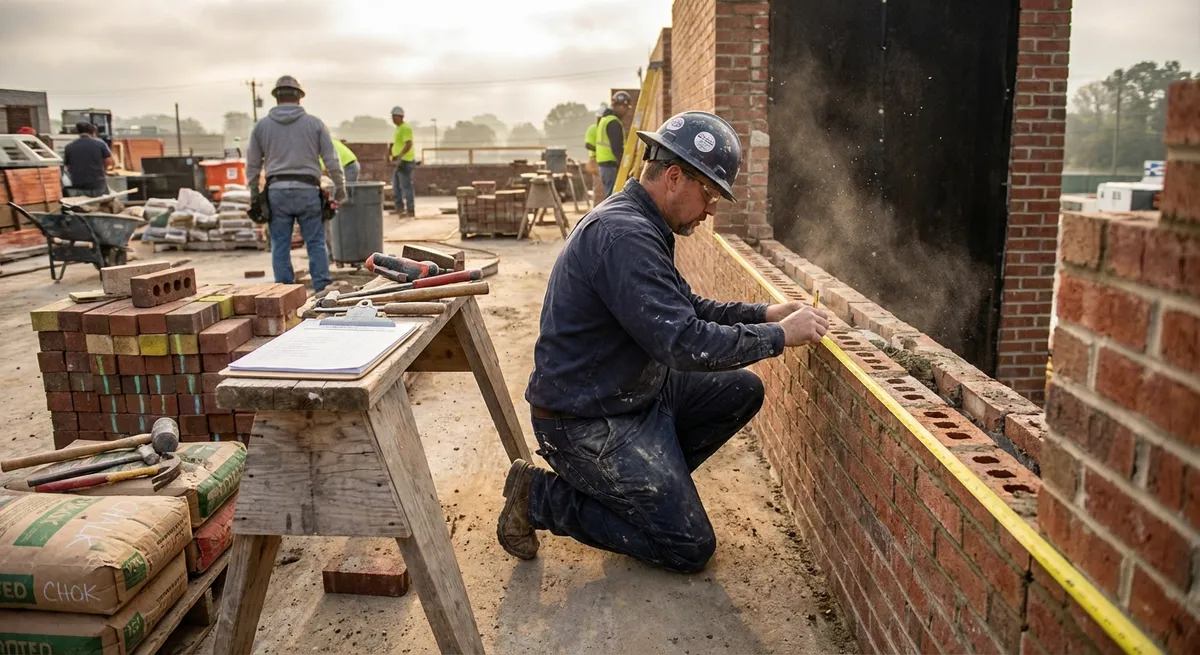
This guide walks through five expert repair practices that consistently produce cleaner, longer-lasting results in concrete, masonry, and structural fixes—without adding unnecessary complexity.
Tip 1: Stabilize the Problem, Then Repair It
One of the most common mistakes in structural and envelope repairs is treating symptoms instead of causes. Cracks, spalling, and door misalignment often point to underlying movement or moisture that must be stabilized before you touch a trowel.
Start with movement. Check for settlement, deflection, or shifting using a level, string lines, and feeler gauges. If a foundation wall crack widens at the top but closes at the bottom, for example, you may be dealing with rotation, not just shrinkage. Stabilization might require shoring, additional footings, helical piers, or simply relieving point loads with temporary supports before any patching begins.
Then assess moisture. Use a moisture meter on suspect surfaces, and look for telltale signs like efflorescence, peeling paint, or rusted fasteners. Fix drainage and bulk water first: regrade soil to slope away from the structure, extend downspouts, clear or add gutters, and repair flashing. For interior spaces, address vapor drive with appropriate barriers and ventilation.
Only once the structure is stable and water is managed should you move to cosmetic or surface-level repair. Skipping this sequence often leads to recurring cracks or delamination, even when the repair materials are high quality.
Tip 2: Match Materials to the Existing Structure, Not the Label
Using the wrong repair material can be as damaging as not repairing at all. A rigid, high-strength patch on a flexible or lower-strength base can cause new cracking at the interface, or even accelerate damage in freeze–thaw conditions.
Start by identifying what you’re tying into: old brick, block, stone, poured concrete, or lightweight CMU all behave differently. Older masonry often used lime-rich mortars that are softer and more vapor-permeable than modern Portland cement mixes. Patching historic brick with a hard, dense mortar can trap moisture in the brick, causing it to spall.
Where available, review the original specifications or building era standards. For masonry, compare mortar hardness to the parent material using a simple scratch test (brick should be harder than mortar, not the other way around). For concrete, note whether it’s structural or nonstructural, interior or exterior, and subject to deicing salts or heavy loads.
Then choose repair products specifically designed for the application:
- Use compatible mortar types (N, S, O, or lime-based) based on exposure and existing construction.
- Select concrete repair products rated for bond strength, freeze–thaw durability, and thickness range you’ll actually be installing.
- For exterior work, prioritize vapor permeability where the assembly needs to dry out.
Always read the technical data sheet—not just the marketing language on the bag. Look at compressive strength, flexural properties, and recommended substrates. When in doubt, err toward compatibility and flexibility rather than maximum strength.
Tip 3: Build Surface Prep Into Your Schedule, Not as an Afterthought
Surface preparation is where durable repairs are won or lost. Dust, laitance, old coatings, and weak or contaminated substrates drastically reduce bond strength and lifespan, no matter how good the repair product is.
Plan surface prep as its own line item in your schedule and estimate. For concrete and masonry, start by removing all loose or deteriorated material down to sound substrate using a chipping hammer, cold chisel, or grinder. Avoid glazing or overheating the surface with aggressive grinding; you want a sound, textured base, not a polished plane.
Next, clean thoroughly. Use a stiff brush, vacuum, or compressed air to remove dust. In greasy or oil-contaminated areas (garages, old workshops), use appropriate degreasers and follow up with thorough rinsing and drying. For exterior work, pressure washing can help, but give the surface time to dry to the condition specified by the repair material manufacturer.
For concrete patches, consider mechanical profiling (shot blasting or grinding) to achieve the recommended surface profile (often CSP 3–5 for repair mortars). Verify that any previous sealers, curing compounds, or paints are fully removed where new bonding is required.
Finally, precondition the surface just before repair. Many cement-based materials bond best to a surface that is saturated surface-dry (SSD): damp but not shiny-wet. This prevents the base from pulling water out of the repair mix too quickly, which can weaken the bond and cause shrinkage cracking. Skipping any of these steps is a common cause of patch failure and delamination.
Tip 4: Control Curing Conditions Like You Control Measurements
Getting the mix right is only half the job; curing conditions often matter just as much for strength, bond, and crack resistance. Temperature, humidity, and airflow all affect how repair materials hydrate and gain strength.
First, check the temperature range on product data sheets. Most cement-based repair materials perform best between about 50°F and 80°F. In cold conditions, use insulated blankets, heated spaces, or temporary enclosures to keep the repair and substrate above minimum temperature thresholds during the initial cure window. In hot, dry, or windy weather, plan for shading, windbreaks, and extra moisture control.
Control evaporation. Rapid surface drying can lead to plastic shrinkage cracks and weak surface layers. For concrete and mortar repairs, lightly misting the surface after it has set enough to resist damage, covering with plastic sheeting, or using curing compounds (when compatible with subsequent finishes) helps maintain moisture during early hydration.
For deeper or structural repairs, follow the manufacturer’s recommended cure time before loading, drilling, or finishing. Don’t assume “hard to the touch” equals full strength. Premature loading or aggressive finishing can create microcracks or bond weaknesses that show up months later as failures.
Where products allow, consider extended curing for high-stress or exterior repairs. The modest cost in time often pays back in reduced callbacks and longer service life, especially in freeze–thaw climates or areas with deicing salts.
Tip 5: Document Every Repair as if Someone Else Will Finish It
Consistent documentation can be the difference between a one-time fix and a recurring headache—especially on jobs where multiple trades or phases overlap. Treat repairs as traceable events, not just quick fixes.
Start by recording the location, type of defect, suspected cause, and chosen repair approach. Photos taken before, during, and after the repair are especially valuable. Capture close-ups and wider context shots, including any temporary shoring, drainage changes, or structural adjustments made.
Log the products used: brand, product name, batch numbers (if available), mix ratios, and any additives. Note ambient conditions on the day of repair (temperature, humidity, weather exposure) and the curing approach used. For structural or envelope-critical repairs, include rough dimensions of the repair area and depth.
Keep this information accessible: in a shared digital folder, project management software, or a simple binder for smaller jobs. When a new crack appears nearby six months later, these records help you distinguish between a new problem and an extension of an old one. For DIYers, this level of documentation pays off when you sell the property or bring in a professional later—they can build on your work instead of starting from zero.
On larger projects, consistent repair documentation also supports warranty claims and reduces disputes. It becomes clear what was done, with what, and under what conditions—exactly the kind of clarity that keeps projects moving and relationships intact.
Conclusion
Durable repairs aren’t about shortcuts; they’re about controlling the variables you can: stabilizing the underlying problem, choosing compatible materials, investing in surface prep, managing curing conditions, and documenting the work.
Whether you’re patching a small slab or addressing recurring masonry cracking, these habits turn one-off fixes into reliable, predictable outcomes—and reduce the likelihood that you (or someone else) will be back in the same spot, doing the same repair twice.
Sources
- [Portland Cement Association – Concrete Repair](https://www.cement.org/learn/concrete-technology/durability/concrete-repair) – Overview of concrete repair principles, including material compatibility and surface preparation
- [U.S. General Services Administration – Masonry: Mortar Types and Uses](https://www.gsa.gov/technical-procedures/masonry-mortar-types-and-uses) – Guidance on selecting compatible mortars for different masonry conditions
- [National Ready Mixed Concrete Association – Curing Concrete](https://www.nrmca.org/concrete-resources/cips/curing-in-place-concrete/) – Best practices for concrete curing and how temperature and moisture affect performance
- [National Park Service – Preservation Brief 2: Repointing Mortar Joints in Historic Masonry Buildings](https://www.nps.gov/articles/000/preservation-brief-2-repointing-mortar-joints-in-historic-masonry-buildings.htm) – Detailed discussion of matching repair materials to existing masonry, especially lime vs. cement mortars
- [Concrete Construction Magazine – Surface Preparation for Concrete Repair](https://www.concreteconstruction.net/how-to/repair/surface-preparation-for-concrete-repair_o) – Practical guidance on achieving proper surface profiles and cleaning before repair