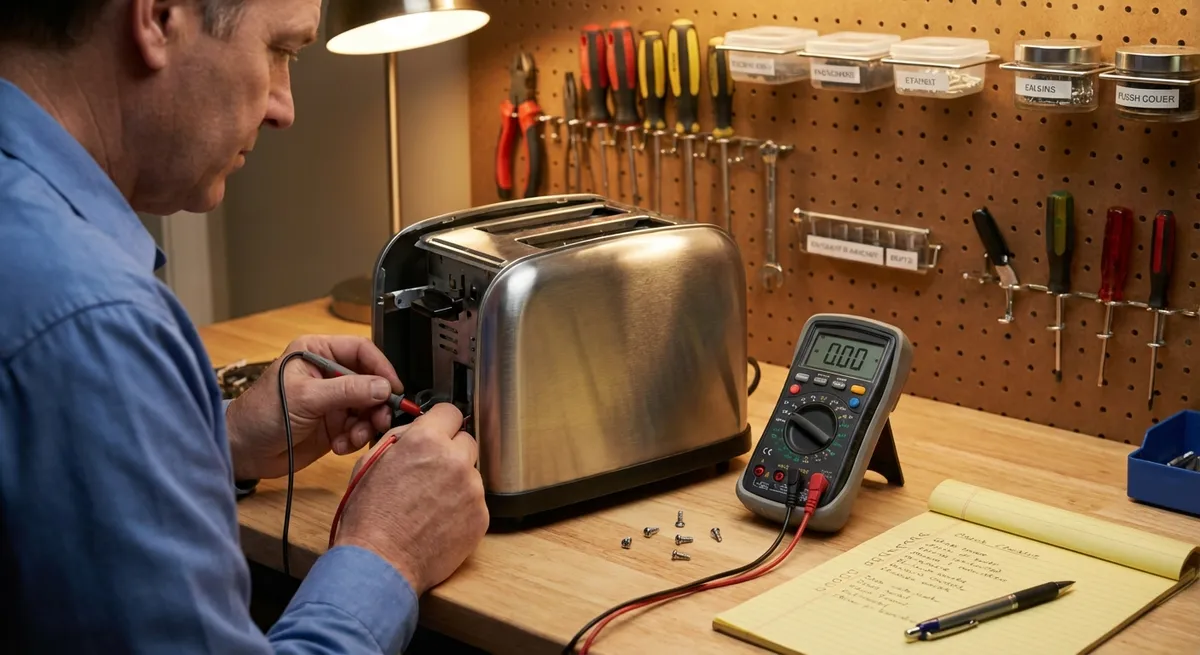
Diagnose the Cause, Not Just the Damage
Lasting repairs start with understanding why something failed in the first place. Replacing what’s broken without tracking the root cause only resets the countdown to the next failure.
Begin with a structured walkthrough of the problem area. Look at adjacent components, not just the obvious damage: cracked tile might point to subfloor movement; peeling paint might indicate trapped moisture; a sagging header could expose undersized framing or rot. Ask three questions before committing to a repair plan: What changed? Where did the first signs appear? What conditions (water, movement, load, temperature) are most extreme here?
Use basic diagnostic tools: moisture meters on suspect walls or trim, a level or laser for checking movement, and a flashlight plus awl or screwdriver for probing hidden rot. On structural or load-bearing issues, compare what you see to code tables, manufacturer instructions, or engineering details when available. If anything suggests foundation movement, significant rot, electrical hazard, or gas-related problems, stop and bring in a licensed pro—no “repair tip” is worth assuming structural or safety liability.
Document your observations with photos and notes, especially on professional jobs. It helps explain scope to clients, justifies recommended work, and creates a baseline to compare against once the repair is complete.
Prepare Surfaces Like the Repair Depends on It (Because It Does)
In real-world failure analysis, poor surface prep is one of the most common reasons repairs don’t last. Adhesives let go, coatings peel, and patches pop out not because the product was bad, but because it was applied to dirty, wet, or unstable material.
Your prep checklist should always cover four points: cleanliness, dryness (within the product’s allowable range), sound substrate, and profile (the right texture for bonding). For masonry or concrete, remove any loose material, laitance, efflorescence, or old coating by mechanical means—wire brushing, scraping, or grinding—and then blow or rinse away dust. Allow sufficient dry time if you clean with water; trapped moisture can ruin the bond of repair mortars, patching compounds, or coatings.
For wood repairs, cut back to solid, sound material, not just where the rot or damage becomes less obvious. Probe with a sharp awl; if it sinks easily, keep cutting. Sand or plane surfaces to remove old finishes and contaminants before gluing, filling, or painting. When you’re bonding new materials to old—such as applying patching compounds to existing concrete—use primers or bonding agents recommended by the manufacturer and follow their open times carefully.
On painted surfaces, don’t skip deglossing when recoating over semi-gloss or gloss finishes. Scuff sanding or using a chemical deglosser gives new paint or coatings a mechanical “key.” For any repair where adhesion is mission-critical, do a small test area first. If it scrapes off easily after curing, you’ve identified a prep problem before committing to the full job.
Match Materials and Methods to Real-World Conditions
Many repairs fail not because they were done poorly, but because the wrong product or method was chosen for the environment. Indoor materials used outdoors, rigid materials where movement is expected, or generic sealants in specialty joints all lead to premature failure.
Start by identifying the conditions the repair will face: UV exposure, standing water, freeze-thaw cycles, high humidity, heavy traffic, temperature swings, or structural movement. Then select materials designed for those conditions. For example, use exterior-grade, UV-resistant sealants for joints exposed to sunlight and weather—not interior acrylic caulk. On horizontal concrete repairs exposed to de-icing salts and freeze-thaw cycles, look for patching products rated for those environments, often with air-entrainment or polymer modification.
In areas with regular movement—deck connections, window perimeters, long drywall runs—choose flexible materials and details that can tolerate expansion and contraction. That might mean backer rod plus high-quality elastomeric sealant instead of a thick bead of stiff caulk, or control joints in concrete patches so cracking happens where you expect it, not randomly across the surface.
Pay close attention to manufacturer technical data sheets (TDS), not just the marketing on the front label. Look for service temperature ranges, recommended substrates, cure times, and any limitations. On professional jobs, spec compliance matters: ensure fasteners are corrosion-resistant where required, pressure-treated wood is used against concrete or masonry, and fire-rated assemblies are repaired with listed, compatible materials.
When in doubt, call the manufacturer’s technical support line. Their job is to help you apply products correctly, and they often provide detail drawings or additional guidance that never makes it to the retail shelf.
Control Moisture and Movement Before You Close Anything Up
Moisture and movement are two of the most common forces that silently destroy repairs. If you don’t control them, cosmetic fixes or partial patches will only mask deeper problems until they return—often worse than before.
Before repairing finishes, investigate and address water sources: roof leaks, failed flashing, clogged gutters, missing kick-out flashing, open penetrations, or capillary wicking from grade. Inside, inspect plumbing lines, condensate drains, and around windows and doors. Fix the water intrusion pathway first, then repair the visible damage. Otherwise, you’re building over an active failure.
Similarly, address structural or framing movement before patching finishes. If the subfloor flexes, the tile above it will eventually crack again. Sagging joists, undersized spans, or missing blocking should be corrected with proper framing techniques—sistering joists, adding beams or columns per code—before resurfacing floors or walls. In high-movement areas, use decoupling membranes under tile or floating systems that allow limited movement without transmitting stress.
For exterior and below-grade work, integrate repairs with proper drainage and ventilation. This can include sloping surfaces away from structures, adding weep holes where appropriate, maintaining clear air gaps behind cladding, and ensuring crawl spaces or attics are adequately vented and not trapping moisture. On envelope repairs, think in terms of water management layers: cladding, water-resistive barrier, flashing, and structure. Your repair should restore that sequence, not just patch the outermost layer.
Never close up walls, ceilings, or floors that have been wet without confirming they are dry to an acceptable moisture level and free of active mold growth. Use moisture meters, allow adequate drying time, and remove any materials that can’t be effectively dried or cleaned.
Document Your Repair So the Next Person Isn’t Guessing
Professional builders know that today’s repair is tomorrow’s “existing condition.” The more clearly you document what you did—and why—the easier it is for future work to build on your decisions instead of fighting them. This applies whether you’re running a contracting business or keeping your own home in good order.
At a minimum, capture clear photos before, during, and after the repair from multiple angles. Include close-ups of critical details: fastener patterns, joint treatments, sealant transitions, flashing terminations, or hidden hardware. For complex repairs, sketch a simple diagram showing dimensions, materials, and locations of key components, especially anything concealed in walls, floors, or ceilings.
Keep product documentation: technical data sheets, installation instructions, and batch labels when available. Note any deviations you had to make from standard details and why (existing conditions, access limits, or structural constraints). For structural, electrical, gas, or fire-rated assemblies, record any permits or inspections completed and attach copies of approvals when applicable.
Store this information in an organized way: a shared drive for your company, a digital “house manual” for homeowners, or a labeled folder in your project management system. On professional jobs, providing clients with a brief repair report—photos, description of cause, scope of work, and materials used—builds credibility and helps reduce disputes if something unrelated fails later.
Good documentation doesn’t just protect you; it improves the quality of future work. When the next person can see what’s behind the finish layer, they’re far less likely to make compromises or guesses that undermine your repair.
Conclusion
Reliable repairs aren’t about clever tricks; they’re about disciplined habits repeated on every job. Diagnose the root cause before you touch a tool. Prepare surfaces like adhesion and durability truly matter. Match materials to actual site conditions, not just what’s on the shelf. Control moisture and movement so you’re not building over active failures. And document your work so it stands up to scrutiny—both now and years from now.
Whether you’re running crews or managing your own property, these practices turn “patches” into durable solutions and reduce the chances of seeing the same problem twice.
Sources
- U.S. Department of Housing and Urban Development – Residential Rehabilitation Inspection Guide (PDF) - Comprehensive guidance on diagnosing building problems, moisture, and structural issues in existing homes
- Building Science Corporation – Building Science Insights - Research-based articles on moisture control, building durability, and repair strategies
- U.S. EPA – Moisture Control Guidance for Building Design, Construction and Maintenance - Practical guidance on identifying and correcting moisture problems before and after repairs
- Portland Cement Association – Concrete Repair - Technical information on proper surface preparation, material selection, and methods for concrete repairs
- Sherwin-Williams – Product Data Sheets and Surface Preparation Guides - Detailed technical data and prep requirements for coatings and sealants used in professional repair work