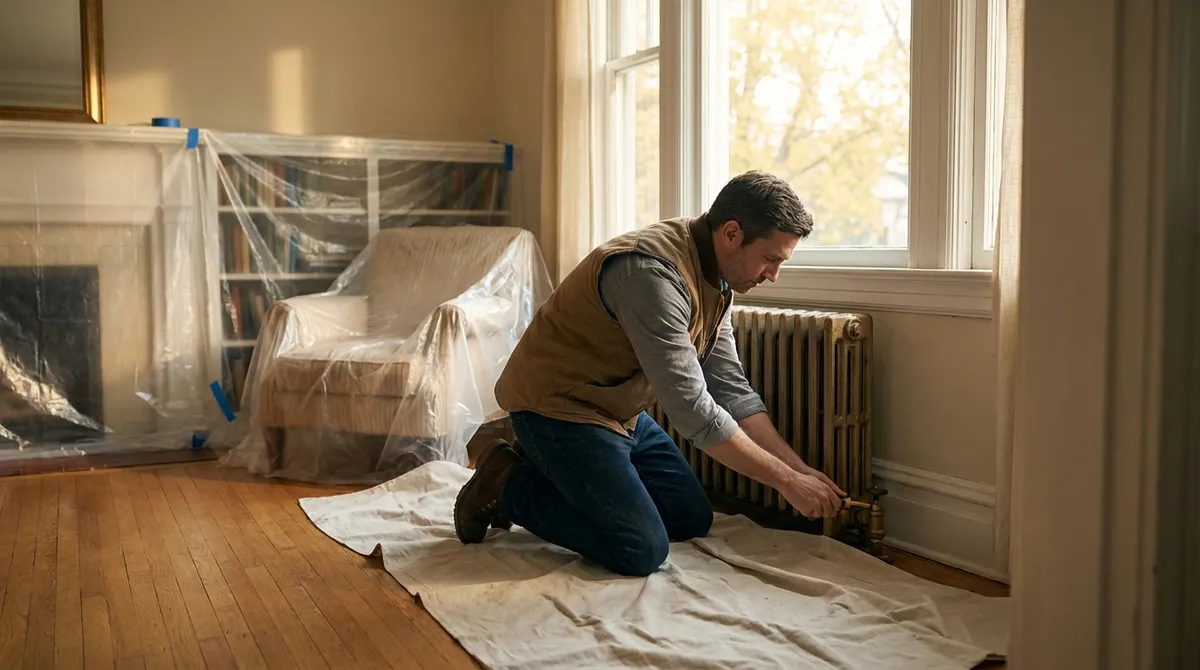
This guide focuses on practical, field-tested tactics that let you repair confidently while minimizing collateral damage, mess, and callbacks. These are the kinds of habits pros rely on in occupied homes, commercial interiors, and tight jobsite conditions.
Tip 1: Stabilize Before You Touch Anything
Rushing into a repair without stabilizing the area first is how small issues become big claims. Before you remove, cut, or chip anything, your first job is to make the surrounding structure and finishes safe.
Start by identifying what’s carrying load and what’s just finish. In masonry, for example, cracked brick above an opening may be cosmetic—or it might be showing you that a lintel has failed. Check for deflection, sagging, or doors and windows that don’t close right; those can be more reliable red flags than the crack itself. Use a straightedge and level to see if adjacent surfaces have moved out of plane.
If you suspect a structural issue, install temporary shoring or bracing before demolition. For framed walls, that could mean adjustable steel columns and a temporary beam, set on solid bearing. For masonry, it might mean needle beams and cribbing or simply sequencing repairs so you never undermine more than a safe portion at once. Even on smaller DIY projects, simple temporary supports (like 2x4 shoring posts under joists while you repair a bearing wall) can prevent sudden shifts.
Stabilization also applies to finishes. Secure loose tile, trim, or panels with painter’s tape, light bracing, or temporary screws before you start chiseling or sawing nearby. The time you spend keeping everything still will pay off when you’re not reattaching a whole wall of finishes you never meant to disturb.
Tip 2: Control Dust and Debris Like It’s Part of the Scope
On many repair jobs, dust control is what clients remember—and complain about—long after the work is done. Treat dust and debris management as a defined task, not an afterthought.
Before you cut, grind, or chip, isolate the work zone. Use plastic sheeting and painter’s tape to create a basic containment area. If you’re in an occupied space, build a zipper-door in the plastic so people aren’t tearing your barriers open. Close HVAC supply and return registers in the work area and cover them so you’re not distributing dust through the ductwork.
Work with tools that support dust extraction whenever possible. Many grinders, drills, and saws accept shrouds that connect directly to a HEPA-rated vacuum. If you’re drilling into concrete or masonry, a vacuum attachment that captures dust at the bit saves time on cleanup and helps keep air quality safer for everyone on site. Wet methods—light misting or using a wet saw—can also significantly reduce airborne dust, but plan containment so slurry doesn’t migrate into adjacent spaces.
Establish a debris path before you start. Decide how you’ll move rubble or removed materials out of the building without tracking dust through finished areas: floor protection, sealed trash containers, and a clear, communicated route. On multi-story jobs, consider chute options or staging bins at intermediate levels rather than walking every bucket through corridors. When you treat dust and debris control as a core part of the repair plan, you protect your reputation as much as the building.
Tip 3: Remove Only What You Must—and Square Up the Damage
Once you’ve opened up a problem area, it’s tempting to keep removing material “just to be sure.” That mentality can turn a surgical repair into a renovation. The more you remove, the more you have to rebuild—and the harder it becomes to match existing conditions.
Instead, define clear removal boundaries before you start. Mark cut lines with a pencil or chalk and re-check them against framing, joints, or modular sizes of the materials you’ll use to patch. When cutting out damaged drywall, plaster, tile, or masonry, aim for square or rectangular openings with clean edges. Irregular tear-outs might seem faster, but they make fitting patches slow, visible, and harder to finish.
For walls and ceilings, try to land your cuts on framing members so you can fasten the repair piece solidly. If that’s not possible, add backing—blocking, furring, or repair clips—so new material has solid support on all edges. In masonry, remove full units back to sound material and avoid leaving slivers or “toenail” fragments that will weaken the patch.
As you remove material, keep an eye on transition zones: where old and new will meet. Feather or bevel those edges when appropriate so joint compounds, patch mortars, or adhesives can bridge cleanly without leaving a visible step. Thoughtful removal isn’t just about saving time and material—it’s about setting up a repair that blends with what’s already there.
Tip 4: Match Materials for Performance, Not Just Appearance
A repair that looks good on day one but fails because the materials aren’t compatible is more expensive than getting it right the first time. Matching color is important, but performance—movement, strength, and moisture behavior—is what really determines whether a repair lasts.
Start by identifying what you’re tying into. For masonry and concrete, note whether the existing material is high-strength or softer, older construction; pairing modern, high-strength products with flexible or low-strength masonry can lead to cracking or separation. For finishes like joint compound, plasters, and tile, check whether they’re designed for interior/exterior use, wet areas, or high-traffic floors.
Read product data sheets instead of just relying on the front label. Look for information about substrate compatibility, cure times, allowable thickness, and any primers or bonding agents required. For example, some rapid-setting mortars or repair compounds can’t be applied over certain sealers or paints without mechanical preparation. Adhesives and sealants should be chosen for the actual environment they’ll live in—temperature swings, UV exposure, movement joints, or regular water exposure.
Before committing to a full repair, test small. Mix a small batch of mortar or compound and apply it to a discrete area or scrap piece of the same substrate. Verify bond, workability, and initial cure. For visible finishes, create a sample patch (even on a piece of drywall or backer board) to see how paint or sealant behaves over your repair material. Taking one extra hour to test often saves you from grinding out a full day’s work that didn’t bond or cure as expected.
Tip 5: Finish and Protect the Repair So It Stays Invisible
A structurally solid repair can still fail its real job if it stands out visually or starts deteriorating under normal use. The final stages—finishing, blending, and protection—are where professional results separate themselves from quick fixes.
For visible surfaces, work your way out from the repair instead of stopping exactly at the edge. Feather drywall compound beyond the patch; extend touch-up paint to logical break points like corners, trim lines, or full wall sections if necessary. On masonry, pay attention to joint profiles, tooling marks, and texture. Matching the way joints are struck or the way a surface is brushed or troweled often matters more than a perfect color match on day one, since everything weathers and fades over time.
Once the repair looks right, think about the forces it will face next: moisture, abrasion, movement, or temperature swings. Seal exterior repairs appropriately—whether that’s repainting with the correct exterior coating, applying a breathable masonry sealer where warranted, or re-caulking joints at windows, doors, and transitions. In wet rooms, verify that your repair respects the waterproofing system: patch membranes, re-tape seams, and re-install flashings before closing things up.
Finally, give the repair the time it needs. Many failures come from loading, painting, or submerging repairs before they’ve reached adequate strength or cure. Follow manufacturer cure times for traffic, moisture exposure, and overcoating, and communicate those limits clearly to owners or occupants. If you leave behind a clean, well-blended repair and clear instructions for the first few days of use, the work is far more likely to remain quietly successful for years.
Conclusion
Effective repair work isn’t just about fixing the visible defect; it’s about stabilizing the area, containing side effects, and integrating new work so it behaves like part of the original construction. When you stabilize first, control dust like it’s billable work, remove selectively, match materials for performance, and finish with protection in mind, you deliver repairs that stay out of the spotlight—and out of the callback list.
Whether you’re a contractor in occupied buildings or a homeowner working in a finished space, adopting these “quiet fix” habits turns every repair into an opportunity to protect the rest of the building, your schedule, and your reputation.
Sources
- [OSHA – Controlling Silica Dust in Construction](https://www.osha.gov/silica-crystalline/construction) - Guidance on safe dust control practices and equipment in construction work
- [U.S. EPA – Lead-Safe Certified Guide to Renovate Right](https://www.epa.gov/lead/renovate-right-important-lead-hazard-information-families-child-care-providers-and-school) - Covers containment, cleanup, and occupant protection during repair and renovation
- [WBDG (Whole Building Design Guide) – Exterior Wall Rehabilitation](https://www.wbdg.org/building-rehabilitation-design-guide/exterior-wall-rehabilitation) - Technical discussion of repair strategies, material compatibility, and detailing for durable repairs
- [Portland Cement Association – Concrete Repair Basics](https://www.cement.org/learn/materials-applications/concrete-materials/concrete-repair) - Overview of concrete repair considerations including material selection and preparation
- [USG – Gypsum Board Repair & Patching Guide](https://www.usg.com/content/usgcom/en/products-solutions/products/wallboard/drywall/repair-patching.html) - Manufacturer guidance on best practices for drywall and gypsum board repairs