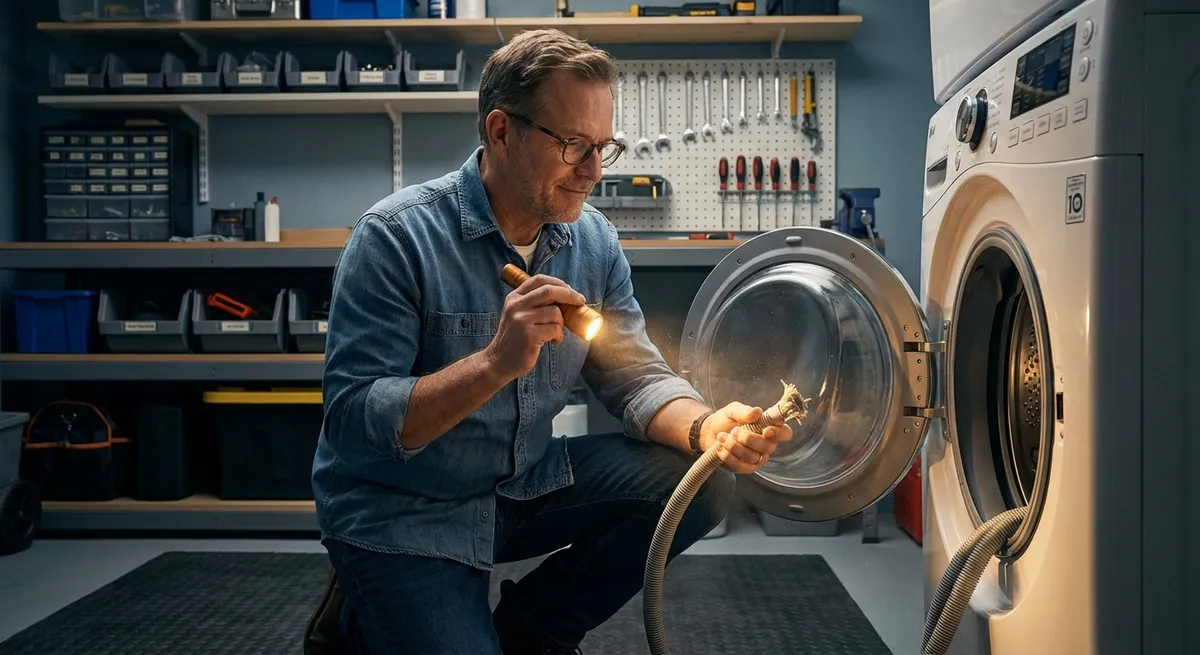
This guide walks through five expert-level habits that working contractors and serious DIYers use to spot issues sooner, repair smarter, and keep buildings performing longer.
Tip 1: Read the Story in the Damage, Not Just the Damage Itself
Every visible defect—stain, crack, warp, or squeak—is a symptom, not the root issue. Professionals train themselves to treat repair work like investigation, not just patching.
Start by mapping what you see:
- Cracks: Note length, width, and direction. Horizontal cracks in walls may indicate different stresses than vertical or diagonal ones. Mark the ends with a pencil and date them; re-check in a few weeks to see if they’re moving.
- Moisture marks: Look for hard edges (often from a one-time event) versus irregular, feathered edges (often from ongoing leaks). Track gravity: follow the water’s likely path up-slope—roof, flashing, plumbing runs, or condensation points.
- Wood movement: Cupped, crowned, or gapped boards point toward moisture imbalance. Check humidity and nearby water sources rather than just sanding or shimming.
- Repetitive failures: If the same area has been “fixed” twice already (bubbling paint, repeat caulk failures, recurring mildew), assume previous repairs treated symptoms only.
Systematically ask:
What forces are acting here? (water, load, movement, UV, temperature)
What has changed recently? (new roof, new HVAC, new appliance, grade change)
What’s upstream or underneath this defect?
Document with photos and simple notes, especially for structural or water-related issues. This investigation step takes time up front but cuts down on rework and missed hazards.
Tip 2: Stabilize the Environment Before You Repair
Many repairs fail because materials are installed in the wrong conditions—too wet, too cold, too hot, or too unstable for the product to cure or perform as designed.
Before starting:
- Check temperature and humidity: Read the manufacturer’s data sheet, not just the label. Many sealants, adhesives, patching compounds, and coatings have minimum and maximum temperature and relative humidity ranges.
- Control moisture where possible: Use fans, dehumidifiers, or temporary heat to bring the space into a workable range before applying compounds or coatings. For flooring, let materials acclimate to the space for the recommended time.
- Address moving assemblies: Hinges, door frames, decks, and handrails that flex under load need different fastening and joint strategies than rigid components. If movement is unavoidable, use flexible sealants, isolation pads, or slip joints instead of brittle materials that will simply crack again.
- Allow for building movement: Thermal expansion in siding, long runs of trim, or metal components requires gaps and fastener patterns that anticipate seasonal shifts.
Stabilizing the environment is especially critical for:
- Paint and coatings: High humidity or cold substrates can cause poor adhesion, slow curing, and premature failure.
- Tile and stone work: Excess moisture in substrates leads to debonding, efflorescence, or grout failures.
- Concrete and repair mortars: Temperature and moisture during curing dramatically change strength and longevity.
Adopt a simple rule: if you can’t get the environment into the product’s recommended range, delay the repair or choose a product specifically designed for those conditions.
Tip 3: Expose, Clean, and Key-In Before You Patch
Professional repairs last longer because pros prepare more aggressively than most DIYers expect. The goal isn’t to hide damage; it’s to expose the full extent, create a clean bonding surface, and mechanically “lock” the repair to the existing material.
Build a disciplined prep routine:
Expose the full boundary of damage:
- Remove all loose or delaminated material, even if it doubles the repair size. - Tap with a hammer or screwdriver handle to hear hollow spots in plaster, tile, or concrete. Hollow = suspect. - For rot, keep cutting back until you hit clean, solid wood with uniform color and resistance to a screwdriver probe.
Clean aggressively:
- Remove dust, laitance, chalky paint, oils, mildew, and efflorescence. - Use appropriate cleaners (trisodium phosphate alternates, degreasers, mildew removers) and rinse/neutralize as directed. - Allow drying time suited to both the substrate and the repair material.
Create mechanical keying:
- Roughen smooth surfaces (e.g., lightly grind or sand concrete, scuff glossy paint fully before patching). - Undercut edges for some patch materials so the repair can “lock” in instead of simply sitting on a feather edge. - For epoxy or structural fillers, drill small anchor holes or use reinforcement mesh/fiberglass where recommended.
Use primers and bonding agents correctly:
- Check if your repair system calls for primer or bonding agent; use the specific type designed for that material. - Apply within the manufacturer’s open time window for bonding (too early or too late both hurt performance).
This level of preparation can take longer than the actual patch, but it is the single most consistent difference between a short-lived fix and a professional, durable repair.
Tip 4: Match Materials to Loads, Not Just to Appearance
A repair that looks right but doesn’t handle real-world loads—weight, tension, compression, shear, moisture, and UV—is likely to fail. Professionals think in terms of performance first and cosmetics second.
When selecting materials:
- Categorize the job by stress type:
- Structural or load-bearing (joists, beams, headers, posts, stair stringers)
- Repetitive movement (joints, door frames, railings, decks)
- Constant moisture or splash (bathrooms, basements, exterior steps, sills)
- UV and weather exposure (cladding, trim, decks, roofing)
- Match fasteners to environment and substrate:
- Use corrosion-resistant fasteners (stainless, hot-dipped galvanized) near treated lumber, masonry, or exterior exposure.
- Use the correct diameter and length for shear and withdrawal resistance; don’t substitute smaller screws “because that’s what’s on hand.”
- Anchor into structural members, not just finishes, where safety is concerned (handrails, cabinets, heavy fixtures).
- Respect material compatibility:
- Avoid mixing certain metals (e.g., aluminum against copper or some galvanized fasteners) in wet environments to prevent galvanic corrosion.
- Confirm that adhesives and sealants are compatible with plastics, foams, and coatings you’re bonding to.
- Use rated structural repair systems (epoxies, straps, plates) for structural defects instead of generic fillers.
- Use assemblies, not just products, for critical repairs:
- For tiled showers, rely on complete, tested waterproofing assemblies (membrane + drain + thinset + tile) rather than piecing together mismatched components.
- For exterior penetrations, integrate flashing, tape, sealant, and cladding so water is directed out, not trapped inside.
If you’re unsure whether a repair is structural, default to caution: consult a structural engineer or building professional. Overbuilding a non-critical area wastes a bit of money; underbuilding a structural area can be dangerous.
Tip 5: Document, Test, and Revisit High-Risk Repairs
Professionals assume that some repairs will need adjustments or verification. Rather than “fix and forget,” they document what they did, perform simple tests where appropriate, and plan a follow-up.
Build a simple quality loop into your repairs:
Document what you did:
- Take before-and-after photos, including any hidden work (inside walls, under floors, behind panels). - Record product names, batch numbers (for important systems), and cure times. - Note any compromises made (e.g., partial access, seasonal conditions) so future work can account for them.
Function-test repairs:
- For plumbing: flow-test and leak-test under normal and slightly elevated pressure where safe. - For electrical (where licensed/qualified): test with appropriate meters, and verify load and breaker sizing. - For door, window, and weather sealing: hose test or controlled water test to confirm no leaks before closing up. - For structural or deck repairs: apply controlled live load (several people or known weights) while inspecting for deflection, movement, or unusual sounds.
Plan a revisit schedule for high-risk zones:
- Note on a calendar to re-check: - Any area that had active water intrusion - Repairs in basements, crawlspaces, and flat roofs - New assemblies subject to seasonal movement (exterior trim, siding, longer-span decks) - On revisit, look for: - Hairline cracks reappearing - Stains or moisture returning - Fasteners backing out or components shifting
Label access points and shutoffs:
- Clearly identify shutoff valves, junction boxes, and access panels created for future servicing. - Keep a simple “house file” (even for DIY homes) with drawings or notes showing what was done and where.
This habit turns one-off fixes into a maintained system. Over time, your building history becomes an asset—cutting diagnosis time, guiding better product choices, and proving what’s been done if you ever sell or need professional help.
Conclusion
Durable repair work is less about finding a miracle product and more about adopting disciplined habits: investigate the real problem, stabilize the environment, prepare aggressively, match materials to actual loads, and then verify and revisit critical areas.
Whether you’re a full-time contractor or a serious DIYer, treating each repair as part of the building’s long-term health—not just today’s to-do item—will reduce callbacks, prevent repeat failures, and protect the structure you’re responsible for. The most valuable “tool” you bring to any repair isn’t in your toolbox; it’s the mindset you apply before you ever pick up a blade, brush, or drill.
Sources
- [U.S. Environmental Protection Agency – Moisture Control Guidance for Building Design, Construction and Maintenance (PDF)](https://www.epa.gov/sites/default/files/2014-08/documents/moisture-control.pdf) - Detailed guidance on how moisture affects buildings and best practices for controlling it
- [U.S. Department of Energy – Energy Saver: Air Sealing Your Home](https://www.energy.gov/energysaver/air-sealing-your-home) - Explains building envelope, air leakage paths, and sealing strategies relevant to durable repairs
- [International Code Council (ICC) – International Residential Code (IRC) Overview](https://www.iccsafe.org/advocacy/building-codes/irc/) - Describes residential code framework that governs structural, mechanical, and safety-related repairs
- [Portland Community College – Wood and Moisture: Effects on Dimensional Stability](https://www.pcc.edu/staff/pdf/wood-moisture.pdf) - Technical overview of how moisture affects wood movement and performance
- [Sherwin-Williams – Product Data Sheets](https://www.sherwin-williams.com/architects-specifiers-designers/product-data-sheets) - Example of manufacturer technical sheets specifying surface prep, environmental conditions, and application requirements for coatings and repair products