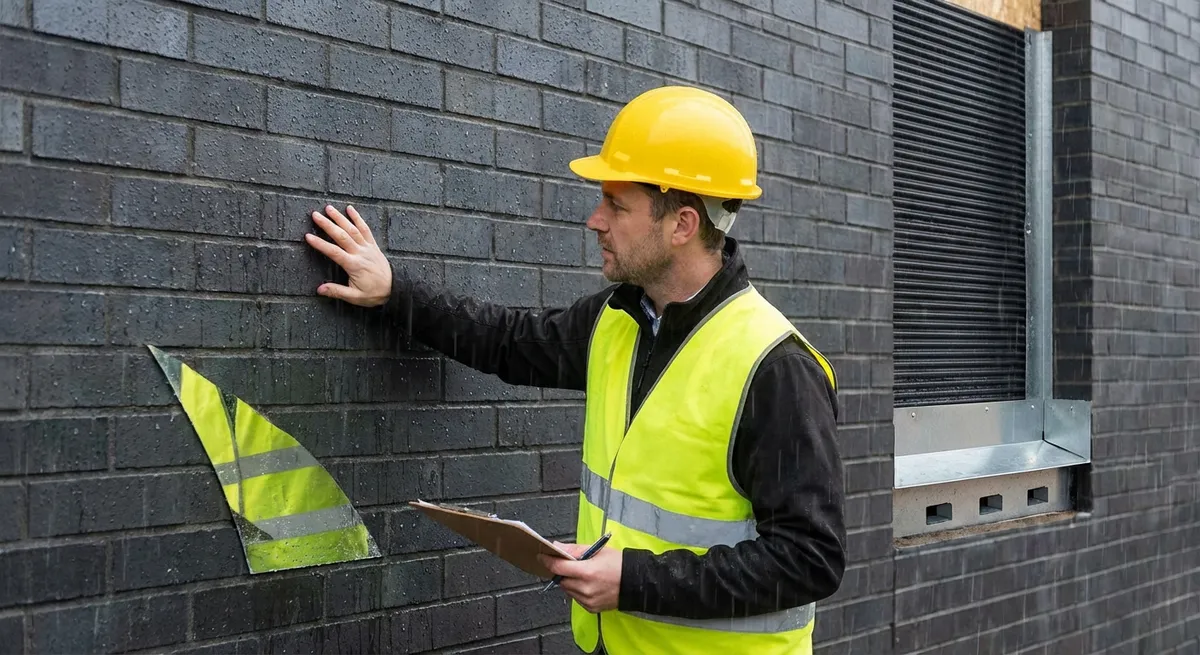
Why Moisture Management Matters in Masonry
Masonry looks solid, but it’s not waterproof. Brick, block, stone, and mortar are all porous to varying degrees. They absorb rainwater, vapor from indoors, and even moisture from the ground. Without a plan to control that moisture, it works its way into the wall system and shows up as efflorescence (white salts), peeling paint, musty interiors, and eventually structural damage.
When moisture is allowed to sit in masonry, it can freeze and expand in cold climates, leading to cracked faces, popped corners, and crumbling mortar joints. In warm, humid regions, trapped moisture supports mold growth and accelerates corrosion of embedded metals like wall ties and rebar. Over time, these small problems add up to major structural and cosmetic repairs.
Good moisture management is less about “sealing everything” and more about controlling three things: how water gets in, how far it travels, and how quickly it can get out. Effective details—flashings, weeps, drainage, compatible materials, and smart maintenance—keep water where it belongs and allow masonry to dry between wetting cycles. The following sections focus on practical steps anyone working with masonry can use to build assemblies that stay drier, longer.
Understanding How Water Moves Through Masonry
Before choosing products or details, it’s crucial to understand the basic ways water enters and moves through masonry walls. Most failures trace back to underestimating one of these mechanisms.
Bulk water is the obvious one: rainfall, splash-back from the ground, and melting snow that hit the surface directly. This water can move through cracks, gaps at joints, poorly sealed penetrations, and unprotected tops of walls. Capillary action is less visible but equally important. Masonry acts like a sponge—drawing water into tiny pores and transporting it horizontally and vertically through the wall, sometimes many feet away from the original entry point.
Vapor diffusion is another route. Warm, moisture-laden air moves toward cooler areas and can pass through masonry materials even when they look solid. If vapor hits a cold surface inside the wall, it can condense into liquid water. Finally, air leakage can carry large amounts of moisture into or out of a wall when buildings aren’t properly sealed at joints, windows, and interfaces with other materials.
Once you see walls as moisture transport systems rather than solid barriers, design choices become clearer. Flashings, weeps, cavity spaces, sealants, and breathable surface treatments all serve a purpose in guiding and releasing this moisture. Every project—new construction or repair—should deliberately address how water will be handled across the entire assembly, not just at the visible face.
Expert Tip 1: Design for Drainage, Not Just Resistance
Trying to make masonry “waterproof” by itself is a losing battle. The more reliable approach is to assume that some water will get in and then provide a clear, uninterrupted path for it to escape. This drainage-first mindset dramatically reduces long-term problems.
In cavity wall systems, this means providing a consistent air space behind the brick or stone veneer, typically at least 1 inch, and keeping it as free of mortar droppings as possible. Mortar collection devices or drainage mats placed at the base of the cavity help prevent mortar from blocking weep holes. They maintain open channels so water can move down and out instead of saturating interior wythes or insulation.
At transitions—above window and door heads, at shelf angles, and at the base of walls—continuous through-wall flashing should direct any water in the cavity back to the exterior. Overlaps at joints should be shingled in the direction of drainage, and mechanical fastening or adhesive must be compatible with both the flashing and substrate. For solid masonry walls without a cavity, consider adding a drainage layer on the exterior (such as a ventilated rainscreen system) when performing major renovations.
Even on small residential projects like garden walls or freestanding piers, a drainage mindset helps: slope caps away from the wall interior, provide drip edges to keep water from running down faces, and avoid flat horizontal surfaces where water can pond. Designing for drainage minimizes the amount of water that can linger long enough to cause damage.
Expert Tip 2: Get Flashing and Weeps Right the First Time
Flashing and weeps are two of the most critical, yet often overlooked, components in a moisture-resistant masonry wall. Installed correctly, they act as the exit system for water; installed poorly or skipped altogether, they guarantee buried moisture problems that are difficult and expensive to fix later.
Flashings should be continuous across the full thickness of the wall behind the veneer and extend to form a drip edge at the exterior. In veneer walls, they’re typically located at the base of walls, above openings, at shelf angles, and at transitions between materials (such as masonry to siding). Choose materials rated for long-term durability in masonry environments: stainless steel, copper, or high-quality synthetic membranes intended for embedded use. Avoid thin, non-UV-stable plastics that can tear or degrade over time.
Weep holes—small openings at the base of the wall and above flashings—allow water to escape. Placing them at 24–32 inches on center is typical; spacing wider increases the risk of trapping water. Tube weeps, open head joints, or proprietary weep devices can work, but they must remain open. Protect them from insect intrusion while preserving airflow and drainage capacity. On repairs, if efflorescence or damp spots appear above windows or at the base of walls, check for blocked or missing weeps before attempting cosmetic fixes.
During construction, supervise mortar placement carefully at flashing levels. Embedded flashing is easily punctured or bridged by excess mortar. Using cavity meshes or droppings control devices helps keep the drainage path clear. Correct flashing and weep detailing is one of the highest-return investments you can make in the lifespan of a masonry assembly.
Expert Tip 3: Control Rising Damp With Proper Foundation Detailing
Moisture doesn’t only come from above; it also moves up from the ground. Rising damp—water wicked upward through foundations and walls by capillary action—can cause peeling finishes, rot in adjacent framing, and persistent indoor humidity and mold problems. Once it’s established, it’s difficult to correct without disruptive work.
The first line of defense is a properly detailed damp-proof course (DPC) or capillary break at or near grade, typically placed between the foundation and the first masonry course. This layer (made of non-absorbent materials like bituminous membranes, plastic, or metal) breaks the continuous capillary path, preventing moisture from traveling up the wall. It must be continuous across the whole wall thickness and carefully lapped at joints.
Site grading is just as important. Soil should slope away from the building at a minimum of 5 percent (about 6 inches of drop over 10 feet) to move surface water away from foundations. Downspouts should discharge well clear of walls, and splash blocks or extensions should be used on smaller structures. In areas with high groundwater, sub-slab drainage systems or perimeter French drains may be needed to reduce hydrostatic pressure and water availability at the foundation.
For existing masonry where rising damp is suspected, investigate before treating symptoms. Look for a clear horizontal line of staining or salt deposits, test interior relative humidity, and check for missing or compromised DPCs. Any repair strategy—whether adding internal barriers, improving drainage, or installing new capillary breaks—must address both moisture supply at the base and the pathways that allow it to rise.
Expert Tip 4: Use Breathable, Compatible Surface Treatments
Surface sealers and coatings are common tools in the battle against moisture, but they must be chosen and applied carefully. The goal is to limit liquid water penetration while allowing water vapor to escape. Trapping moisture inside masonry with non-breathable finishes can be worse than leaving it untreated.
For exterior walls, penetrating water repellents based on silane or siloxane chemistry are generally preferred over film-forming coatings like acrylics or epoxies, especially on brick and block. These treatments soak into the pores and change surface tension so liquid water beads up and runs off, while still allowing vapor to diffuse out. They are particularly useful in areas exposed to wind-driven rain, salt spray, or deicing chemicals.
Compatibility with existing materials is critical. Before applying any treatment, confirm that the brick, stone, or block manufacturer allows the product and that it won’t alter appearance beyond acceptable limits (such as darkening or adding sheen). Always test small, inconspicuous areas first. Avoid using vapor-tight coatings on the interior face of exterior masonry unless a building enclosure specialist has confirmed that the wall can safely dry outward under all expected climate conditions.
On repair projects, remove failed coatings that are peeling or blistering, as they may already be trapping moisture. Clean surfaces with methods that don’t drive water further into the wall (for example, low-pressure washing over abrasive blasting in many cases), and allow adequate drying time before applying new treatments. A breathable, compatible water repellent used as part of a broader moisture strategy—not a standalone fix—can significantly extend the life and appearance of masonry.
Expert Tip 5: Build in Regular Inspection and Maintenance
Moisture problems in masonry rarely appear overnight; they develop slowly and usually provide early warning signs. A simple, consistent inspection and maintenance routine can catch issues while they are still minor, especially on larger properties or commercial facilities.
At least once a year, walk the exterior and interior faces of masonry walls. Look for discoloration, efflorescence, hairline cracks near joints and openings, crumbling mortar, or spalled (flaking) surfaces. Pay special attention to roof-to-wall interfaces, parapets, window heads and sills, and areas near downspouts and grade transitions. Note any changes from previous years—new stains, increased cracking, or expanding wet zones.
Address small deficiencies promptly. Repoint localized mortar joints where the mortar has lost its bond, but be sure to match the original mortar type in strength and composition; overly hard mortars can damage softer historic brick. Reseal failed sealant joints at windows, doors, and material transitions using high-quality, appropriate sealants. Clear blocked weep holes carefully rather than sealing over them, and repair missing or damaged flashings when accessible.
Documenting these inspections—with photographs and brief notes—creates a maintenance history that helps identify recurring patterns and prioritize repairs. For complex or persistent moisture problems, engage a building enclosure consultant or structural engineer to investigate the full assembly rather than repeatedly treating surface symptoms. A modest, planned maintenance effort is far less costly than large-scale masonry remediation triggered by years of unnoticed water damage.
Conclusion
Moisture control in masonry isn’t about chasing leaks as they appear; it’s about designing and maintaining walls that expect to get wet and are built to dry. When you treat masonry as a system—combining drainage-friendly details, reliable flashing and weeps, proper foundation practices, breathable treatments, and regular inspections—you dramatically improve durability, appearance, and performance.
For both construction professionals and hands-on owners, these five expert strategies provide a practical framework: let water out, stop it from wicking up, allow walls to breathe, and keep small issues from becoming major failures. Applied consistently, they turn masonry from a recurring maintenance headache into a long-lived asset that performs as solidly as it looks.
Sources
- Brick Industry Association – Technical Notes on Brick Construction - Detailed guidance on brick masonry design, moisture control, flashing, and weeps
- Portland Cement Association – Concrete Masonry Construction - Information on concrete masonry behavior, durability, and moisture considerations
- U.S. General Services Administration – Masonry (Guides and Specifications) - Federal guidance on design, detailing, and maintenance of masonry in government buildings
- National Park Service – Preservation Briefs on Masonry (NPS.gov) - Best practices for evaluating, repairing, and maintaining historic masonry, including moisture and rising damp issues
- Building Science Corporation – BSD-105: Understanding Drainage Planes - Explains how drainage planes, cavities, and flashing work together to manage water in wall assemblies