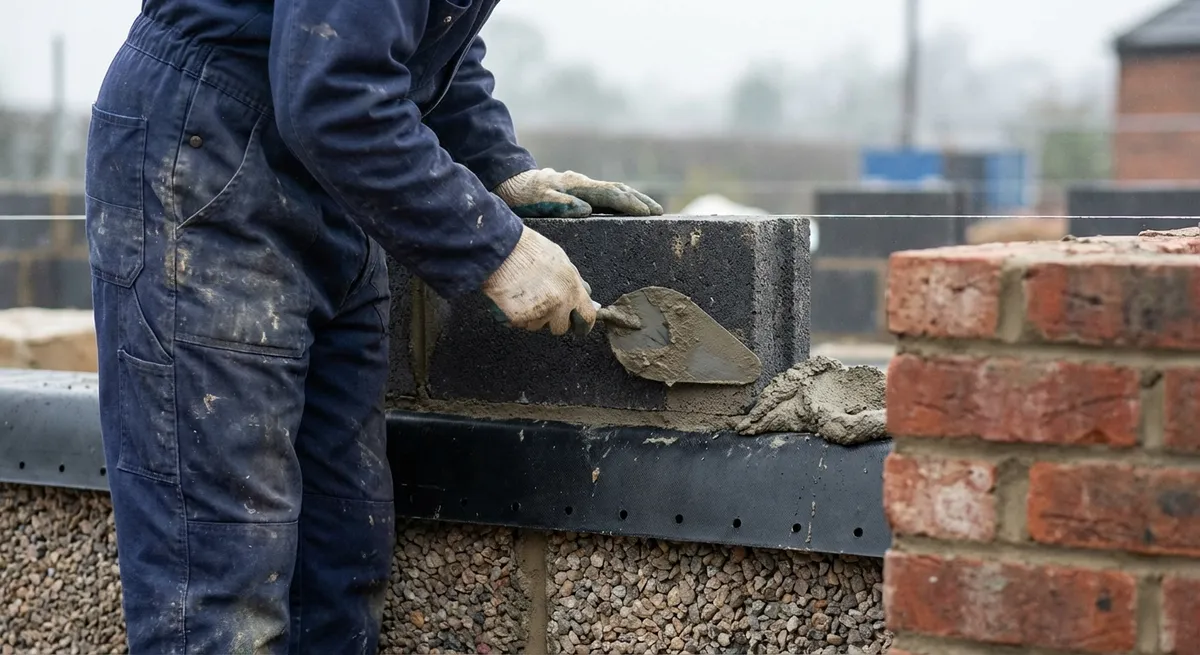
Why Water Control Is Masonry’s Real Foundation
Masonry materials—brick, block, stone, mortar—are porous. They don’t just get wet; they absorb and transmit water by capillary action. That water moves through joints, hairline cracks, and even sound units, then responds to temperature swings by expanding, contracting, and sometimes freezing. Over time, this cycle breaks down faces, joints, and sometimes entire sections of wall.
Modern building codes and standards assume water will get behind cladding and into masonry. The goal isn’t to keep every drop out; it’s to ensure a clear path for water to drain and for assemblies to dry. That means planning cavities, flashings, weeps, and vapor-permeable layers as deliberately as you plan rebar and bond beams. When moisture control is built into the layout, detailing, and scheduling, you get walls that are calmer under load, more resistant to salts and stains, and less likely to spawn callbacks or remedial waterproofing.
Tip 1: Plan the Wall as a Moisture System, Not Just a Stack of Units
Before laying the first course, map how water will enter, move, and exit the wall. Think of it as a system: exterior face, cavity (if any), structural wythe, air/vapor control layers, and interior finish. Sketch the wall in section and literally draw arrows for water paths—wind-driven rain, splashback at grade, condensation points, and drainage routes.
For exterior veneer over backup framing, confirm there is a continuous water-resistive barrier (WRB) or drainage plane behind the veneer, lapped over flashing and sealed at openings. For single-wythe concrete masonry walls, specify integral water repellents in both block and mortar, and pair them with compatible clear surface sealers where needed. In basement and retaining applications, plan positive-side waterproofing (on the soil side), not just damp-proof coatings.
Make sure your design gives gravity and air pressure a chance to work in your favor. That usually means a slight slope on all horizontal surfaces to shed water, a vertical drainage space or routed path for bulk water, and clear exit points like weep holes that aren’t blocked by mortar droppings or landscaping later on.
Tip 2: Use Mortar Mixes and Joint Profiles That Help, Not Hurt
Mortar isn’t simply “glue” for masonry units; it’s a controlled weak link that accommodates slight movements and provides a continuous water path—good or bad. Choosing the right mortar type and tooling it correctly is critical for moisture control.
Match your mortar type to the masonry unit and exposure. Softer historic brick often needs a lower-strength, higher-lime mortar (Type O or N) so the mortar sacrifices itself instead of the brick. Modern structural block or engineered brick in severe weather zones usually call for stronger mixes like Type S in load-bearing contexts. Verify compatibility with local codes and manufacturer recommendations; over-strong mortars can cause cracking and spalling, while under-strength mixes can degrade prematurely.
Joint profile affects how much water sits on the wall and how quickly it sheds. Concave and V-joints, tooled when mortar is thumbprint-hard, compress the surface and promote runoff, making them ideal for exterior work. Raked, flush, or weathered joints can trap water or leave more open pores if not executed perfectly. On exposed exterior walls in wet or freeze-thaw climates, stick with a well-tooled concave joint unless your design intentionally demands otherwise.
Tip 3: Detail Flashing and Weeps Like They’re Structural
Flashings and weep systems often fail not because the materials are wrong, but because they’re installed as an afterthought. In reality, they are structural to the moisture performance of the wall. If you wouldn’t casually omit a lintel, don’t casually improvise flashing.
At the base of cavity walls, over window and door openings, and at shelf angles, install through-wall flashing that extends from the backup, across the cavity, and out to the face of the veneer with a visible drip edge. Lap WRBs and air barriers over the vertical leg of the flashing to ensure any incidental water finds the flashing, not the interior.
Weep holes only work if they’re sized and spaced correctly, and if there’s actually a path for water to reach them. Use open head joints, plastic weep inserts, or rope wicks at 24–32 inches on center, following your local codes or manufacturer guidance. Keep the cavity or drainage space clear of mortar droppings using cavity nets or boards during construction. Before closing up any section, visually confirm there’s a continuous drainage path to each weep. A “perfect” flashing without a clear way out for water is essentially a bathtub behind your brick.
Tip 4: Respect Curing, Temperature, and Sequencing to Avoid Moisture Traps
Even the best details can fail if materials don’t cure properly or if assemblies are closed up too soon. Water in fresh mortar and grout needs time and a stable environment to hydrate cement and gain strength. If that water escapes too fast or is locked in by impermeable coatings prematurely, long-term durability suffers.
Follow appropriate curing practices for your climate. In hot, dry, or windy conditions, protect fresh masonry from rapid moisture loss using damp curing, fogging, or curing blankets as recommended by standards and product data. In cold weather, keep materials and work areas within specified temperature ranges and protect from freezing until the mortar has gained adequate strength.
Sequence interior finishes, insulation, and vapor barriers so that walls can dry to at least one side. For example, don’t install low-permeance interior finishes on a masonry wall that also has an impermeable exterior coating unless you’ve intentionally designed a vented cavity or other drying strategy. Always read manufacturer instructions for waterproofing products: many require fully cured, dry substrates before application to avoid blistering, debonding, or trapped moisture.
Tip 5: Maintain the Envelope With Inspections, Cleaning, and Targeted Repairs
Water management doesn’t end when the scaffolding comes down. Even well-built masonry needs periodic checks to stay watertight. A simple maintenance plan can prevent small moisture issues from becoming structural problems.
Schedule visual inspections at least once a year, and after major storms or freeze-thaw cycles. Look for efflorescence (white salts), hairline cracking at joints or corners, mortar erosion, staining, and biological growth like moss or algae—these are early clues that water is moving where it shouldn’t. Inspect flashings for damage, open laps, or failed sealant at terminations. Confirm that weep holes remain open and not blocked by mulch, caulk, or vegetation.
When repairs are needed, use materials that are compatible with the existing masonry. Match mortar type, color, and tooling as closely as possible. For historic or soft brick, avoid hard, high-Portland mortars or dense sealers that can trap moisture in the units. Clean masonry with methods suited to the material—low-pressure water and appropriate detergents rather than aggressive sandblasting—following manufacturer or conservation guidance. Finished walls that are routinely inspected and repaired in a targeted way will manage water far more effectively over their service life than those left untouched until major failures force expensive interventions.
Conclusion
Managing water in masonry isn’t just a matter of adding a sealer or caulking a joint; it’s a mindset that starts with wall design and carries through detailing, installation, curing, and long-term maintenance. By treating the wall as a moisture system, choosing compatible mortars and joint profiles, installing robust flashing and weeps, respecting curing conditions, and planning for ongoing inspections and repairs, you build masonry that works with water instead of fighting it. Whether you’re a contractor aiming to reduce callbacks or a DIY builder investing sweat equity into your own structure, these practices translate into walls that stay sound, dry, and dependable year after year.
Sources
- The Masonry Society – Water Penetration Resistance of Masonry - Technical guidance on how water moves through masonry and how to design assemblies to resist it
- NCMA (National Concrete Masonry Association) TEK: Single Wythe Concrete Masonry Walls - Details on moisture control, integral water repellents, and detailing in CMU walls
- Brick Industry Association – Technical Notes on Brick Construction - Multiple notes on mortar selection, joint tooling, flashing, weeps, and water resistance in brickwork
- U.S. Department of Energy – Moisture Management for Building Enclosures - Overview of moisture behavior in building envelopes and strategies for control and drying
- National Park Service Preservation Briefs - Especially Briefs on masonry repair and repointing, with guidance on compatible mortars, cleaning, and moisture-related deterioration