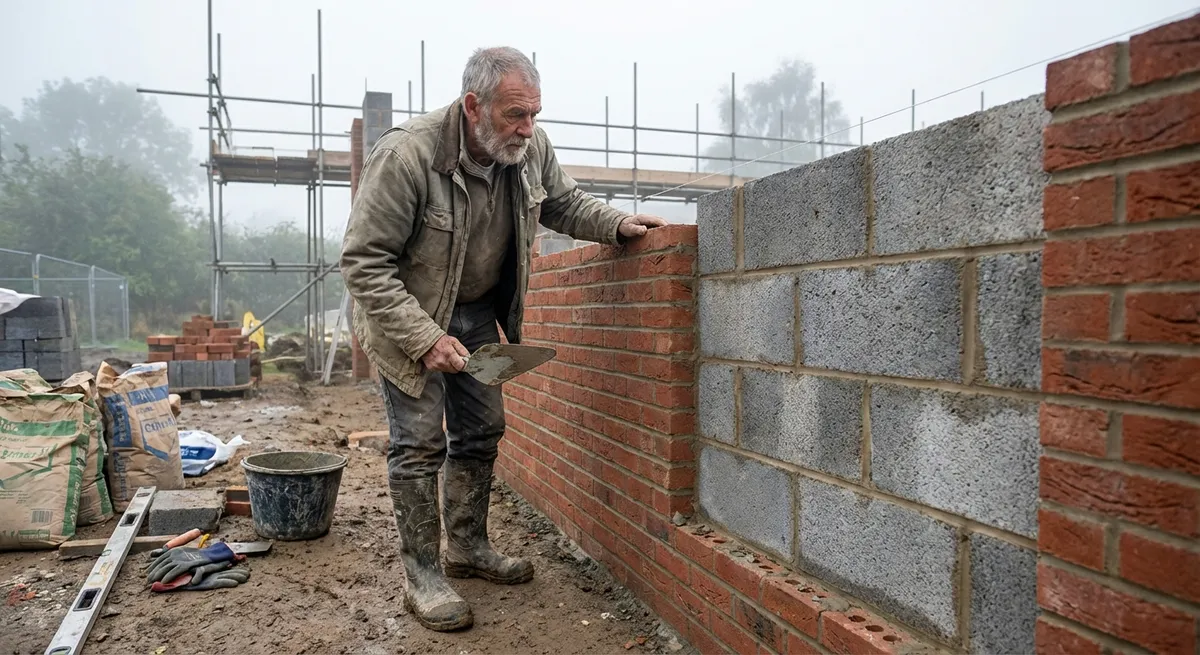
Below are five expert-level practices that improve strength, appearance, and long-term performance without exotic tools or products—just better use of what you already have.
Tip 1: Match the Mortar to the Job, Not Just What’s on the Shelf
Most masonry problems start before the first joint is laid—at the mortar choice. Using whatever bag is on sale is an easy shortcut to future cracking, spalling, or bond failure.
How to choose the right mortar:
- Know the basic types:
- Type M – Highest compressive strength; good for below-grade, foundations, retaining walls.
- Type S – Strong, versatile; typical for exterior walls, patios, and load-bearing block.
- Type N – Medium strength; common for above-grade brick veneer and chimneys.
- Type O/K – Low strength; often for interior or historical repairs, not heavy structural work.
- Don’t overpower the masonry: Softer brick or stone paired with an overly strong mortar can cause the unit (brick/stone) to crack instead of the joint. For old brick, a lower-strength mortar is usually safer.
- Check local code and manufacturer specs: Modern block systems, veneers, and anchors often specify mortar type—follow those instructions rather than guessing.
- Control water content consistently:
- Aim for a workable, not soupy mix. Mortar should hold shape on a trowel, not slide off.
- Use the same water amount per batch and the same mixing time to reduce color and strength variation.
- Mix in small enough batches: If you can’t place and tool the mortar within 2–2.5 hours (less in hot weather), you’re mixing too much at once.
A properly chosen and consistently mixed mortar gives you predictable set times, stronger bonds, and fewer callbacks or redo’s down the line.
Tip 2: Control Water at Every Stage—From Mixing to Curing
Water is the most mismanaged ingredient in masonry. Too little and your joints won’t bond; too much and your wall will shrink, crack, and weaken. Managing water is really a series of small decisions throughout the job.
Before you start laying:
- Pre-dampen units in hot or dry weather:
- Lightly mist brick or block if they’re hot to the touch or extremely dry.
- Aim for “surface-damp, not shiny wet” so they don’t pull water out of the mortar too quickly.
- Cover materials on site: Keep bags of mortar, sand, and units off the ground and under tarps to avoid random moisture levels.
While laying:
- Watch the “open time” of the bed joint:
- Don’t spread more mortar than you can cover with units in a few minutes.
- If the mortar skins over (dull instead of glossy), scrape it off and reapply; don’t try to force bond with dried mortar.
- Avoid re-tempering late: A light splash of water shortly after mixing to maintain workability may be acceptable, but bringing back stiff, partially set mortar with lots of water is a strength killer. When in doubt, discard.
During curing:
- Protect fresh work from rapid drying:
- In hot, windy, or low-humidity conditions, cover new masonry with damp burlap or plastic sheeting (with airflow) for at least 24–48 hours.
- Avoid direct sprinkler spray—gentle, controlled moisture is best.
- Shield from heavy rain: Fresh joints can wash out, stain, or erode in a downpour. Use tarps or temporary covers without forcing water to run down the face of the wall.
Good water control yields stronger joints, fewer early shrinkage cracks, and more consistent color.
Tip 3: Use Simple Layout Checks to Keep Lines True and Loads Straight
A lot of “mystery cracking” in masonry can be traced back to creeping out of level, plumb, or line. The wall may look acceptable at a glance, but tiny deviations add up and create stress points once the structure is loaded or restrained.
Practical layout checks that pay off:
- Run a control course early:
- Dry-lay a full course of brick or block on the ground to verify joint widths, openings, and cuts.
- Adjust bond pattern before mortar is involved.
- Work with a line, not just a level:
- Use mason’s line and line blocks or line stretchers to establish straight, consistent courses.
- Check every few units; don’t “eyeball” for long runs.
- Verify plumb often:
- Use a 4-foot or longer level on both faces of the wall, especially at corners and around openings.
- Small corrections early are far easier than grinding and parging later.
- Mind bond at corners and returns:
- Make sure units interlock properly; avoid straight vertical joints running continuously up the corner (“stack bonds”) unless specifically engineered and detailed.
- Check dimensions at control points:
- Openings, pilasters, and column intersections are natural stress concentrators. Confirm alignment and clearance as you go, not after the wall is complete.
When lines, levels, and bonds are tight, the masonry carries load as intended—meaning less cracking, fewer door/window binding issues, and better performance under wind and seismic movement.
Tip 4: Detail Movement and Joints Before You See Cracks
Masonry is stiff, but it still moves—due to temperature swings, moisture changes, and structural shifts. Ignoring movement joints because “it’s just a small wall” is a common cause of premature cracking.
Key practices for managing movement:
- Plan for expansion and control joints:
- Typical masonry design calls for joints at set intervals and near corners, returns, and openings (spacing depends on wall type and local code).
- These are not “optional” if you want controlled cracking rather than random splits.
- Use the right sealant and backing:
- For movement joints, don’t shove mortar into the gap. Use a flexible sealant with backer rod to allow stretching and compression.
- Follow manufacturer recommendations for joint width-to-depth ratios.
- Separate dissimilar materials where necessary:
- Where brick meets concrete, steel, or wood, anticipate different movement rates.
- Use slip joints, anchors, or flexible connectors designed for masonry-to-structure interfaces.
- Maintain weeps and vents at joints:
- In veneer walls, don’t clog weep holes or base vents with mortar droppings.
- Keep a clean cavity so any water that gets in can drain out rather than build pressure and cause face spalling.
- Honor existing cracks in repairs:
- When repairing a cracked wall, don’t simply fill and forget. Consider whether a control or expansion joint is needed at that location to prevent the crack from returning.
Managing movement intentionally turns uncontrolled cracks into planned joints that look better and perform correctly.
Tip 5: Tool, Clean, and Protect Joints for Long-Term Weather Resistance
The way joints are tooled and finished has as much impact on durability as it does on appearance. Proper timing and technique improve water shedding and help your work resist freeze–thaw damage and staining.
For stronger, weather-tight joints:
- Tool at the right moment:
- Wait until mortar is “thumbprint hard”—firm enough to resist deep deformation but still workable.
- Tooling too early smears; too late can break bond at the unit face.
- Choose a weather-friendly joint profile:
- Concave and V-joints compress the mortar surface and shed water effectively, making them generally preferred for exterior work.
- Raked or struck joints can be more vulnerable to water entry if not detailed and sealed properly.
- Compress, don’t drag:
- Use a jointer that matches joint width.
- Work with steady, even pressure to compress the mortar surface, closing hairline gaps and improving water resistance.
- Clean smart, not aggressive:
- Gently brush off surface smears as soon as the mortar firms up.
- For later cleaning, use manufacturer-approved masonry cleaners and follow dilution and dwell-time guidelines—overly strong acids can damage brick faces and mortar.
- Protect fresh work from contaminants:
- Keep soil, de-icing salts, and splashed concrete away from new masonry.
- Cover lower courses if other trades are working nearby with muddy boots or wet materials.
Proper joint finishing and protection dramatically extend the service life of masonry, especially in freeze–thaw climates or areas with wind-driven rain.
Conclusion
Masonry that genuinely lasts isn’t about secret products; it’s about consistent habits at every stage: selecting the right mortar, managing water, keeping lines true, planning movement, and finishing joints correctly. Whether you’re running a crew or tackling a one-off project at home, the payoff is the same—a wall that stays stable, sheds water, and looks intentional years after the scaffolding comes down.
Build these five practices into your standard routine, and you’ll spend less time fixing past work and more time moving confidently to the next job.
Sources
- Portland Cement Association – Mortar Types and Uses – Overview of mortar types (M, S, N, O) and appropriate applications.
- The Masonry Society – Movement Control in Brickwork – Technical guidance on movement joints, cracking control, and detailing best practices.
- NCMA (National Concrete Masonry Association) – TEK Guides – Engineering and construction resources on concrete masonry units, mortar, layout, and durability.
- U.S. General Services Administration – Masonry Restoration Guidelines – Practical procedures on cleaning, tooling, and protecting masonry surfaces.
- Brick Industry Association – Technical Notes – Detailed recommendations on brick selection, mortar, joint profiles, and water management in brick masonry.