Start With the Right Unit and Mortar Pairing
The most common early mistake in masonry projects is treating all units and mortars as interchangeable. They aren’t. The combination you pick affects strength, crack resistance, and how your wall handles moisture.
Begin by defining what you’re building: structural wall, veneer, retaining wall, outdoor kitchen, or fireplace. For structural and retaining work, concrete masonry units (CMU) often make sense due to predictable strength and compatibility with reinforcement and grout. For veneers and visible work, clay brick or stone may be better, but they demand more attention to size, absorption, and finish.
Mortar should be selected based on both structural needs and the unit’s characteristics:
- Clay brick veneer or historic masonry: A softer mortar (Type N, sometimes Type O in restoration) is often preferable so the mortar, not the brick, takes movement and minor damage.
- Load-bearing or retaining walls: Higher-strength mortar (Type S or M, as required by design or code) may be necessary, especially where significant loads or backfill pressures are present.
- Natural stone: Many stones have low absorption and can be sensitive to salts and moisture. Check manufacturer or quarry guidance, and avoid over-strong mortars that can concentrate stress in the stone.
Match mortar to the absorption rate of your masonry units. High-absorption units (some clay bricks, some manufactured stone) may need pre-wetting and a slightly more workable mortar to ensure good bond. Low-absorption units (dense CMU, some stones) can tolerate a stiffer mix. When in doubt, run a small test panel: lay a few units, let them cure, and break them to inspect bond. Adjust water content and workability from there before committing to the full wall.
Control Moisture: Design for Drainage, Not Just Strength
Moisture is one of the main forces that destroys masonry over time—through freeze-thaw damage, efflorescence, corrosion of reinforcing, and interior leaks. Good masonry doesn’t try to keep every drop of water out; instead, it manages and drains it.
For exterior walls and veneers, plan a drainage path from day one:
- Include a continuous air space or a drainage mat behind brick or stone veneers.
- Install flashings at the base of walls, above openings, and at shelf angles to direct water out.
- Provide weep holes or weep vents at the bottom of the cavity and over lintels so water has somewhere to go.
- Keep cavity spaces clean as you build; drop cloths or cavity nets can keep mortar droppings from blocking the drainage path.
Above-grade CMU or solid masonry should be detailed to shed water quickly. Slightly slope sills, caps, and copings away from the wall. Use through-wall flashing and drip edges on horizontal surfaces that see water or snow. On parapets and freestanding walls, a good cap with overhang and properly sealed joints is often the difference between a dry wall and a saturated, failing one.
On the material side, be cautious with sealants and coatings. Non-breathable coatings can trap moisture inside, accelerating freeze-thaw damage or spalling. Instead, consider breathable, vapor-permeable water repellents designed for masonry. Test them on a small area first to confirm they don’t change the appearance more than you can accept. Always verify compatibility with your specific brick, block, or stone.
Build in Movement Joints Instead of Fighting Cracks
Masonry is strong in compression but weak in tension. It shrinks as it cures, expands and contracts with temperature, and moves with foundations and framing. If you don’t provide a controlled way for that movement to happen, the wall will create its own “joints”—cracks.
Plan control and expansion joints as part of the layout:
- CMU walls: Use control joints at regular spacing (often 20–30 feet apart, adjusted for height, openings, and local codes) and at changes in wall height or thickness. These are vertical joints, typically filled with backer rod and sealant, that allow shrinkage and temperature movement.
- Clay brick veneers: Expansion joints accommodate brick growth and thermal movement. Place them at regular intervals, at corners, and where walls change direction or intersect different materials.
- Mixed materials (masonry meeting wood or steel): Expect differential movement and isolate the masonry with joints or slip connections wherever practical.
Detail these joints properly: use foam backer rod and flexible sealant rated for exterior use and joint size. For long-term work, joint quality is as critical as location. Avoid “grouting” movement joints with mortar in the field; it turns a planned relief point into a rigid stress concentration.
Inside buildings, recognize that slab movement can still crack interior block or brick. Where possible, align masonry joints with known slab joints, or isolate partitions that cross slab joints. For DIY projects like patios or low walls, add control joints in adjoining slabs or pavers to minimize random cracking right at the masonry line.
Reinforcement and Anchors: Small Hardware, Big Consequences
Reinforcement and anchorage are often treated as checkboxes, but they’re critical to performance, especially under wind loads, soil pressure, and minor seismic movement. Good masonry detailing goes beyond simply “adding rebar.”
For CMU walls, verify that:
- Cells intended to be grouted are properly aligned and free of debris or hardened mortar bridges.
- Vertical bars are located correctly within the cell (centered or per design) and securely tied to horizontal reinforcement and dowels.
- Grout is placed with sufficient slump and consolidation to fully surround the bars without voids.
For brick or stone veneers, anchors are your main structural connection to the backing:
- Use corrosion-resistant ties (typically stainless steel or hot-dip galvanized) appropriate to your exposure conditions.
- Place ties at code-compliant spacing both horizontally and vertically, and add extra ties at openings and edges as required.
- Embed ties in mortar joints with sufficient cover and ensure ties are actually bedded, not just “stuck” into half-full joints.
- Avoid compressing insulation or creating thermal bridges unnecessarily; modern systems often use thermally broken ties or clips—follow the manufacturer’s details carefully.
At interfaces—lintels, shelf angles, columns—coordinate masonry bearing with anchor locations so loads don’t shift unexpectedly. Even in small DIY projects like mailboxes or garden walls, simple reinforcing (like vertical rebar in cores and a reinforced footing) significantly improves resistance to impact and frost heave.
Execution Discipline: Practical Habits That Keep Masonry Consistent
Once design and materials are set, performance depends on what happens on site. Several repeatable habits separate clean, durable masonry from work that looks good only on day one.
Focus on mix control and workability:
- Use consistent water-to-mortar ratios. Slight adjustments for weather are normal, but avoid the “sloppy batch at the end” that weakens joints.
- Mix mortar only in amounts you can place before it starts to stiffen (typically 2–2.5 hours, depending on conditions and product guidance).
- Don’t retemper (re-water) mortar that has started to set; it reduces bond and strength.
Pay attention to weather:
- In hot, dry, or windy conditions, pre-dampen high-absorption units and protect fresh work from rapid drying. Fast drying leads to weak bond and surface cracking.
- In cold conditions, keep materials and water above minimum temperatures specified by codes or product data. Never lay units on frozen surfaces or allow fresh masonry to freeze before it gains strength.
- Use windbreaks, shades, or temporary covers as needed. Simple tarps and staging adjustments can preserve workability and curing quality.
For appearance and durability, keep joints consistent:
- Use the same joint profile (tooled concave, V, raked, or flush) across the project; concave and V profiles typically give the best water resistance.
- Tool joints at the right time: not so early that mortar smears, not so late that it crumbles. The joint should be firm but still workable.
- Clean excess mortar promptly with appropriate tools and, if needed, manufacturer-recommended cleaners after initial curing. Avoid aggressive acids on sensitive bricks or stones.
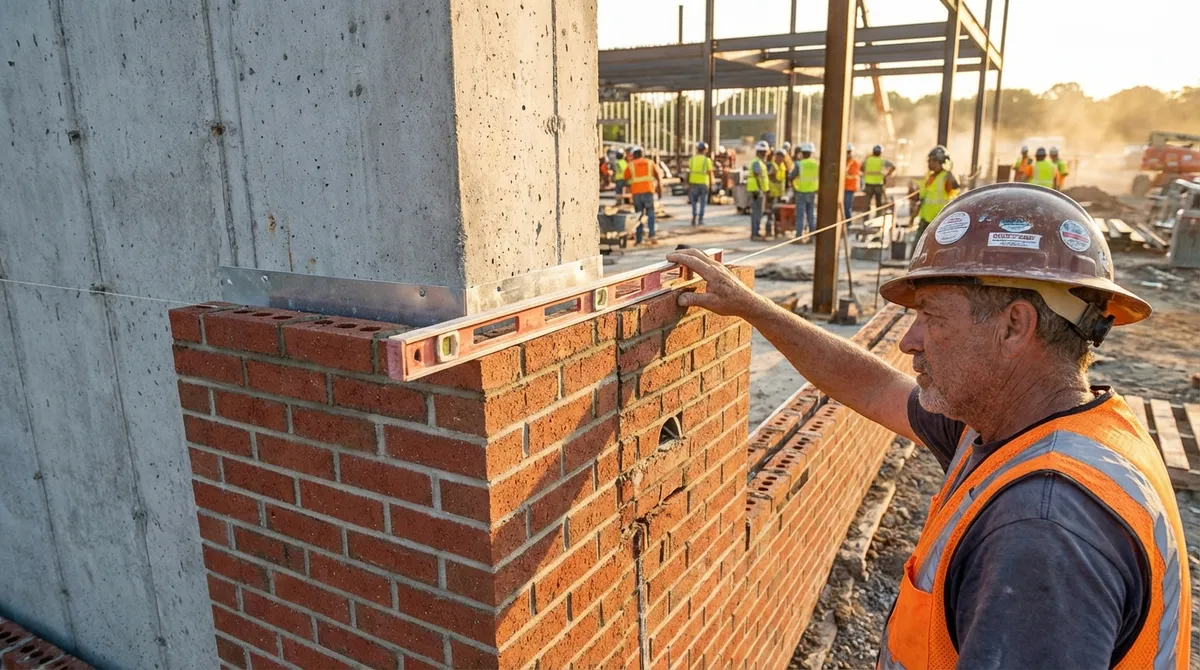
Whether you’re running a crew or working alone, build in short pauses to assess alignment, plumb, and coursing before you move too far. Fixing minor deviations early is always easier than correcting a long wall that has drifted out of tolerance.
Conclusion
The best masonry work is not just strong on paper—it’s durable, predictable, and easier to maintain over time. Those outcomes don’t come from a single “trick”; they come from a series of informed choices: pairing the right units and mortar, managing moisture intentionally, planning movement joints, treating reinforcement and anchors seriously, and enforcing disciplined execution on site.
For both professionals and committed DIY builders, treating these five areas as non-negotiable standards will make your walls straighter, your veneers drier, and your repairs less frequent. Masonry is unforgiving of shortcuts, but very rewarding when the details are handled with care.
Sources
- [U.S. General Services Administration – Guiding Principles for Masonry](https://www.gsa.gov/real-estate/historic-preservation/historic-preservation-policy-tools/preservation-tools-resources/technical-documents/guiding-principles-for-masonry) - Discusses best practices for brick and stone masonry, including moisture and joint considerations
- [The Masonry Society – Masonry Standards and Resources](https://masonrysociety.org/resources-2/) - Provides technical resources and references to TMS 402/602 for structural masonry design and construction
- [Portland Cement Association – Concrete Masonry Construction](https://www.cement.org/learn/concrete-technology/concrete-construction/concrete-masonry-construction) - Covers CMU construction basics, reinforcement, grout, and structural detailing
- [Brick Industry Association – Technical Notes](https://www.gobrick.com/technical-notes) - In-depth guidance on brick selection, veneer anchorage, movement joints, and moisture management
- [International Code Council – Building Codes Portal](https://www.iccsafe.org/products-and-services/i-codes/2024-i-codes/ibc/) - Reference for building code requirements that govern masonry design, materials, and construction practices