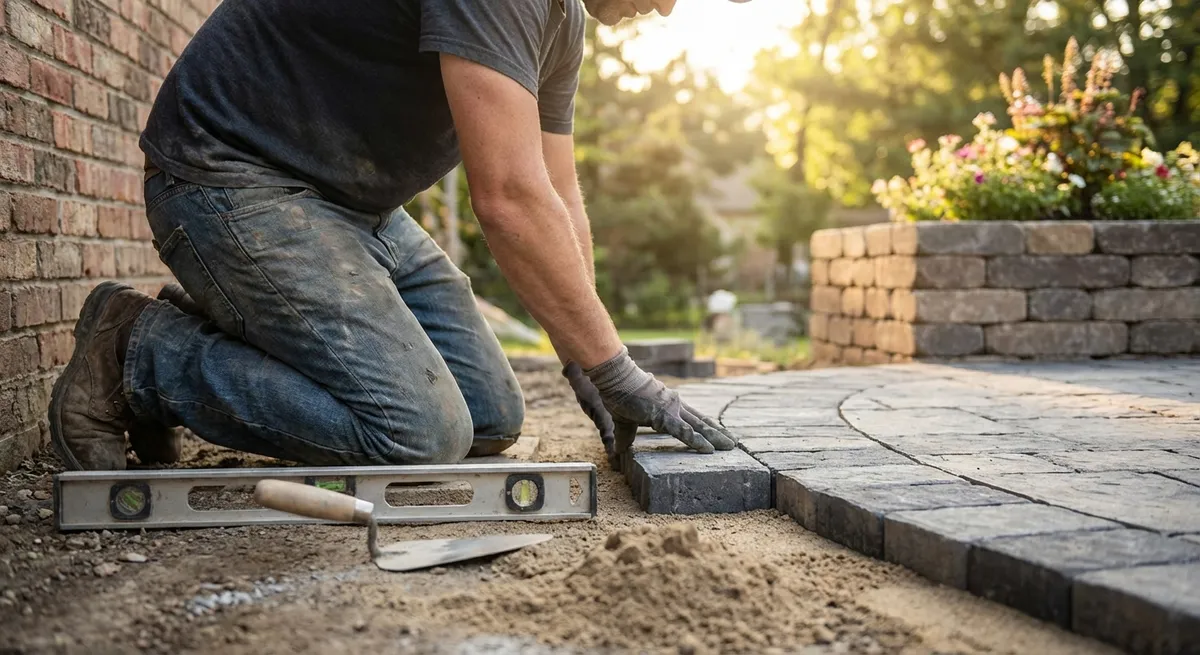
Whether you’re planning a garden wall, a new set of steps, or a simple block enclosure, the techniques below will help you build work that looks professional and lasts.
Choosing the Right Masonry Project for Your Skill Level
Not every masonry task is a good first project, and knowing where to start can be the difference between steady progress and a half-finished headache. Beginner-friendly projects include small garden walls (knee-height or lower), simple block planters, short flagstone or paver walkways, and edging for beds or patios. These require careful layout and basic tool skills but don’t demand complex structural calculations. As you gain confidence in mixing, placing, and finishing mortar or concrete, you can work up to projects like steps, short retaining walls, and veneer facades on existing walls.
Avoid starting with anything that holds major loads, controls water around a structure, or needs engineering (tall retaining walls, structural footings, foundations, chimney work). Those jobs often require permits, code compliance, and soil or drainage evaluation. A good filter: if failure would damage your house, injure someone, or redirect water toward your foundation, get a professional involved or at least consult your local building department first. Use early projects as skill builders—focus on getting level, plumb, and consistent joints before reaching for more ambitious work.
Expert Tip 1: Build From the Ground Up—Subgrade and Base Matter Most
Most masonry failures start below the visible surface. If the soil under your work moves, settles, or holds water, everything above it will eventually show the problem. Before laying a single block or brick, strip off topsoil, sod, or organic material until you reach firm, compactable subgrade—usually 4–12 inches below finished ground level, depending on the project. Organic soil compresses and rots over time, so it’s the enemy of long-term stability.
Once you hit solid ground, add a layer of compactable base stone (often called “crusher run,” “road base,” or “3/4-inch minus with fines”). Spread it in thin lifts—2 to 3 inches at a time—and compact each lift thoroughly using a hand tamper or plate compactor. The goal is dense, locked-in aggregate that doesn’t squish when you walk on it. For walls or steps, your base should extend at least a few inches wider than the finished structure on all sides, which helps distribute weight and resist edge settling.
If you’re in a freeze-thaw climate, depth and drainage become more critical. The base should shed water, not hold it, and any concrete footings need to extend below the local frost depth to avoid heaving. Check local code or building department guidance for recommended footing depths and base practices in your area. A bit of extra excavation and base material up front is far cheaper than tearing out a leaning wall next year.
Expert Tip 2: Control Water, or Water Will Control Your Project
Masonry is strong in compression but vulnerable when water gets trapped around or within it. Good water management starts before you mix mortar. For retaining walls, plan where water will go: behind the wall you’ll usually want free-draining gravel, a perforated drain pipe at the base (daylighted to an outlet), and a filter fabric between soil and stone to prevent clogging. Skipping drainage behind a wall is one of the most common DIY mistakes, and it often leads to bowing or failure after heavy rain or freeze-thaw cycles.
On flatwork like patios, landings, or walkways, slope is your friend. Aim for a slight pitch (around 1/8–1/4 inch per foot) away from buildings, foundations, and door thresholds. Don’t trust your eye alone—use a level and a straight board or a string line to verify slope. For masonry steps or stoops attached to a house, make sure finished surfaces sit below door thresholds and that any adjacent siding or trim details are protected from splash and snow buildup.
Mortar and concrete mixes also interact with water in critical ways. Too much water in the mix weakens the final product and makes it more porous, which invites damage. Follow the manufacturer’s water recommendations, mix thoroughly, and resist the urge to “loosen” the mix just to make it easier to trowel. If you need more workability, consider using a plasticizer or masonry cement designed for easier handling rather than flooding the mix.
Expert Tip 3: Layout Tools Are Non-Negotiable—Use Strings, Levels, and Story Poles
Clean, straight lines and consistent heights are what make a DIY masonry project look like a pro did it. Relying on “eyeballing” leads to wavy walls, steps with varying riser heights, and joints that catch your attention for all the wrong reasons. Instead, set up guide systems you can trust: string lines, levels, and story poles.
For walls and straight runs, drive stakes at the ends of your project, pull a tight mason’s line between them, and use this to establish both alignment and height. Adjust your blocks or bricks so that the visible faces just touch the string without pushing it out of line. Work in manageable sections, and reset your line as you move. For curved work, use layout stakes and flexible hoses or marked boards to define the curve, then check your edge units against the layout as you go.
A story pole—a straight board marked with the height of each course plus joint thickness—is one of the simplest professional tricks you can adopt. Mark it clearly, then use it repeatedly as you build to confirm that each course is landing where it should. This prevents the slow drift that turns up as a surprise at the end of a wall or staircase, such as a final step that’s noticeably taller or shorter than the rest. Check level and plumb often; correcting a small error early is far easier than trying to hide a big one at the finish.
Expert Tip 4: Mix and Handle Mortar Like It Affects the Structure—Because It Does
Mortar isn’t just “gray glue.” It’s a carefully balanced blend that needs the right type, consistency, and timing to perform. First, choose an appropriate mortar type: Type N is common for above-grade, non-structural walls and veneers; Type S is stronger and more suitable for retaining walls, steps, and load-bearing work. Using mortar that’s too strong relative to the masonry units can cause cracking; too weak, and the joints fail prematurely. Check manufacturer recommendations and, when in doubt, match or slightly under-match the strength of the units you’re using.
Proper consistency is about workability and bond. A good mortar mix should be plastic, hold its shape on a trowel, and “butter” onto a brick or block without sliding off. Think peanut butter, not soup. Add water gradually and allow a few minutes of mixing for the material to absorb moisture fully before deciding if it needs more. Overly wet mortar not only reduces strength but also increases shrinkage and cracking as it cures.
Work in batches you can place within about 30–60 minutes, depending on conditions. If the mortar starts to stiffen in the pan, “retempering” once with a small splash of water is usually acceptable, but if it has begun to set or lose plasticity significantly, discard and mix fresh. Keep your tools and mixing equipment clean; old, partially set mortar can contaminate new batches and cause inconsistent performance. In hot, dry, or windy conditions, lightly dampen (not soak) your masonry units and protect fresh joints from rapid drying with shade or temporary covers.
Expert Tip 5: Finish and Cure with Intention, Not as an Afterthought
The last stages of a masonry project—joint tooling, surface finishing, and curing—have an outsized impact on both durability and appearance. For brick and block joints, tooling the mortar at the right time helps compress the surface, improve water resistance, and create a consistent look. Wait until the mortar is thumbprint-hard: it should resist pressing but still be workable. Then run the appropriate jointer (concave, V, or raked profile) along the joint in smooth, continuous passes. Brush off crumbs with a soft brush once the joints have stiffened further, not while they’re still plastic.
On concrete surfaces—pads, landings, or steps—avoid overworking the surface with trowels or adding water to “refresh” a drying top layer. Both practices can weaken the surface and lead to dusting, flaking, or scaling later. Strike off the surface with a straight screed, bull float to bring up a paste and fill minor voids, then let it firm up before final troweling or broom finishing. For outdoor steps and walkways, a light broom finish typically offers better traction than a slick steel-troweled surface.
Curing is where many DIY projects quietly lose strength. Concrete and mortar need controlled moisture to develop their full design strength. Keep new work damp and protected for several days, especially in hot, dry, or windy weather. This can mean covering with plastic sheeting, using curing blankets, or lightly misting and re-covering as recommended by the product manufacturer. Avoid heavy loads, impact, or freeze exposure until the material has reached adequate cure—often a minimum of several days for light use and 28 days for full design strength.
Conclusion
Masonry projects reward careful preparation, precise layout, and patient finishing. The five expert tips above—solid subgrade and base, deliberate water control, reliable layout methods, proper mortar handling, and intentional finishing and curing—are the same fundamentals working masons use on jobs they’ll stand behind for decades. If you approach your DIY upgrades with the same discipline, you’ll end up with work that not only looks professional today but also lasts through seasons of weather and use.
Start with manageable projects, respect what’s happening below and behind the visible surfaces, and treat every mix and joint as part of a permanent structure. That mindset turns a weekend build into something you’ll still be satisfied with years down the line—and it’s the difference between masonry that just looks solid and masonry that truly is.
Sources
- Portland Cement Association – Concrete Basics in Building Construction - Overview of concrete materials, mixing, placing, and curing principles
- NCMA (National Concrete Masonry Association) – TEK Resources - Technical notes on concrete masonry design, construction, and detailing
- U.S. Department of Transportation – Field Manual for Concrete Pavements - Practical guidance on base preparation, placement, finishing, and curing practices
- BIA (Brick Industry Association) – Technical Notes on Brick Construction - Professional standards for mortar selection, joint tooling, and brickwork durability
- University of Illinois Extension – Planning a Landscape Retaining Wall - Practical advice on choosing, laying out, and draining small retaining walls