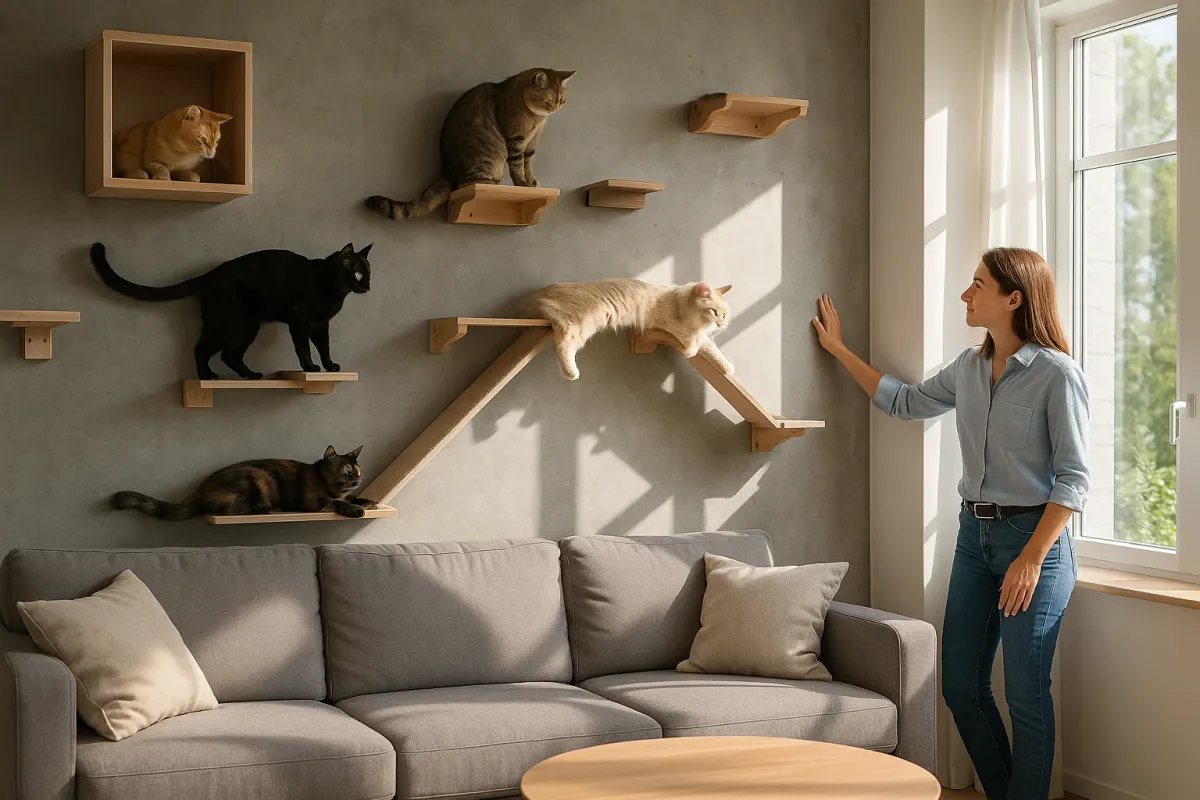
For concrete pros and serious DIYers, this trend is an opportunity. Whether you’re pouring a new patio where pets will play, finishing a basement where litter boxes live, or casting custom concrete steps that double as cat seating, the details matter. Poor prep, wrong mix, or slick finishes can turn a “pet paradise” into a maintenance headache—or a safety risk.
Below are five expert, concrete‑specific strategies to create pet‑friendly, social‑media‑ready spaces that actually hold up in real life.
Design For Claws, Paws, And Clean‑Ups
Before you think about bags of mix or PSI ratings, start with how animals actually use a space. Viral cat photos show pets jumping, sliding, kneading, and sprawling on every horizontal surface they can find. That translates into heavy point‑loads on edges, abrasion from claws, and frequent contact with water bowls, food, and cleaning chemicals.
Plan horizontal concrete surfaces where pets will land or sit—steps, ledges, hearth extensions, window sills—to be slightly wider and with softened arrises (edges) to reduce chipping. Use rounded edge forms or hand‑tool a small radius into stairs and platforms. For floors in pet zones, avoid highly polished concrete: it looks great in photos but can be dangerously slick for animals and people. Instead, specify a light broom finish, a microfiber pad finish, or a low‑sheen sealer with grit additive for traction. In utility spaces where litter, accidents, and spills are likely, design intentional “wet zones” with a slight slope to a floor drain and no absorbent materials (no carpet strips against concrete, no unsealed wood at slab level).
Choose Mixes And Reinforcement That Tolerate Real Use
Pet‑heavy areas see more dynamic loads and edge impacts than people expect—think a 15‑pound cat hitting the same stair edge hundreds of times a month or a large dog repeatedly pushing off a ledge. To prevent cracking and spalling, select mixes and reinforcement as if you were designing for light commercial traffic, not just residential decoration.
Use at least a 3,500–4,000 PSI mix for slabs and steps that will double as seating or perches, and confirm aggregate size is compatible with your form thickness (especially for thin, wall‑mounted features or floating benches). Add synthetic fiber reinforcement to reduce plastic shrinkage cracking, and back it up with conventional steel: #3 or #4 rebar on proper chairs for slabs, and welded wire mesh where appropriate. For slender features like cantilevered shelves or bench‑style steps, consider using a high‑performance bagged concrete formulated for countertops or structural overlays; these mixes are designed for thinner sections with higher tensile capacity. Always respect minimum cover distances—don’t place rebar too close to the surface where claws, moisture, and cleaning agents can accelerate corrosion and cause rust‑jacking.
Specify Finishes That Balance Grip And Cleanability
Pet owners want surfaces that are safe for running paws, easy to mop, and attractive enough to share online. The finishing approach on concrete drives all three outcomes more than any other step in the process.
Aim for a medium‑profile texture on floors where animals move quickly. A simple, consistent broom finish perpendicular to the direction of travel works well on exterior steps and ramps. For interior slabs, consider a power‑troweled surface followed by a very light mechanical profile (e.g., 100–150 grit diamond pass) before sealing. This gives enough micro‑texture for traction without trapping hair and dirt in deep grooves. Avoid aggressive stamped textures in high‑traffic pet areas: they look good on camera but trap fur, dander, and urine, and are harder to sanitize.
Seal with a product matched to use: breathable penetrating sealers (silane/siloxane, lithium, or sodium silicate blends) for exterior patios and runs, and a low‑VOC, abrasion‑resistant urethane or polyaspartic for interior slabs that see frequent cleaning. Always check product data sheets for chemical resistance to common household cleaners and pet‑safe disinfectants. If you need extra slip resistance, add manufacturer‑approved anti‑skid media to the topcoat instead of over‑texturing the concrete itself.
Protect Concrete From Pet‑Related Moisture And Chemicals
Pet areas see more aggressive moisture exposure than standard living spaces: repeated mopping, occasional accidents, wet paws, and sometimes harsh cleaners. Even well‑finished concrete can be damaged over time if it’s not detailed to handle that environment.
Start at the base. Where concrete meets walls in pet spaces, use a 4–6 inch curb or a small integral cove instead of running drywall down to the slab. This prevents moisture wicking into wall materials during cleaning and makes it easier to hose down or wet mop. If you’re building an outdoor run or patio, detail the slab with a minimum 1/8" per foot slope away from the building and ensure any adjacent landscaping doesn’t trap water against the edge.
For chemical protection, select sealers and coatings rated for urine and enzymatic cleaners. Acid‑sensitive decorative stains can be etched or discolored by repeated exposure, so in pet‑dominant areas, favor integral color or pigmented sealers/epoxies instead of acid‑stain systems. Where litter boxes or kennels sit, consider a sacrificial, easily replaceable top layer—like a removable, raised plastic grid over the sealed slab—so the concrete takes less direct abuse. Educate homeowners (or your own future self, if it’s a DIY project) about cleaning protocols: avoid unbuffered bleach directly on bare concrete, and use PH‑neutral cleaners whenever possible to preserve sealer integrity.
Build And Anchor Concrete Features With Safety In Mind
Trending “cat walls” and multi‑level pet environments are inspiring people to integrate more structure into their homes—steps that become lounging platforms, thickened window sills, low retaining walls that double as benches. When those elements are concrete, the safety stakes are higher because the material is heavy, rigid, and unforgiving.
For cast‑in‑place or precast concrete ledges, benches, and steps that animals (and inevitably people) will use, design anchorage as if it were supporting human loads. Follow local building codes for guard heights, tread depth, riser height, and load requirements, even if the element is “for pets.” Use mechanical anchors rated for the load and substrate, and never rely solely on construction adhesive for structural attachment. Where you’re embedding hardware (such as stainless steel posts or rail brackets) into new concrete, maintain proper embedment depth and respect spacing from edges to avoid breakout.
Surface transitions are another safety point. Where concrete meets other materials—like wood cat trees, metal ramps, or tile—keep height differences under 1/4" where possible, and bevel or round any unavoidable steps. This reduces trip hazards for humans and catches for animal claws. Finally, plan lighting: exterior pet stairs and runs built in concrete should have adequate illumination so animals and people can see treads clearly at night, especially if textures cast shadows.
Conclusion
The viral photos of “fluffiest cats ever” lounging on pristine ledges and racing across tiered platforms capture something real: people want homes that work for every member of the household, including pets. For builders and ambitious DIYers, concrete is a powerful tool to deliver those spaces—durable, easy to clean, and architecturally sharp enough to share online.
By starting with how animals actually move, choosing robust mixes and reinforcement, dialing in balanced finishes, defending against moisture and chemicals, and treating every built‑in as a serious structural element, you’ll create pet‑friendly concrete work that’s as practical as it is photogenic. The next time a project brief mentions cats, dogs, or pet zones, think beyond decor. With the right concrete strategy, you can turn “cute content” trends into long‑lasting, high‑performance details your clients will appreciate long after the social buzz fades.